
How Spending Time in Nature Improves Mental Health
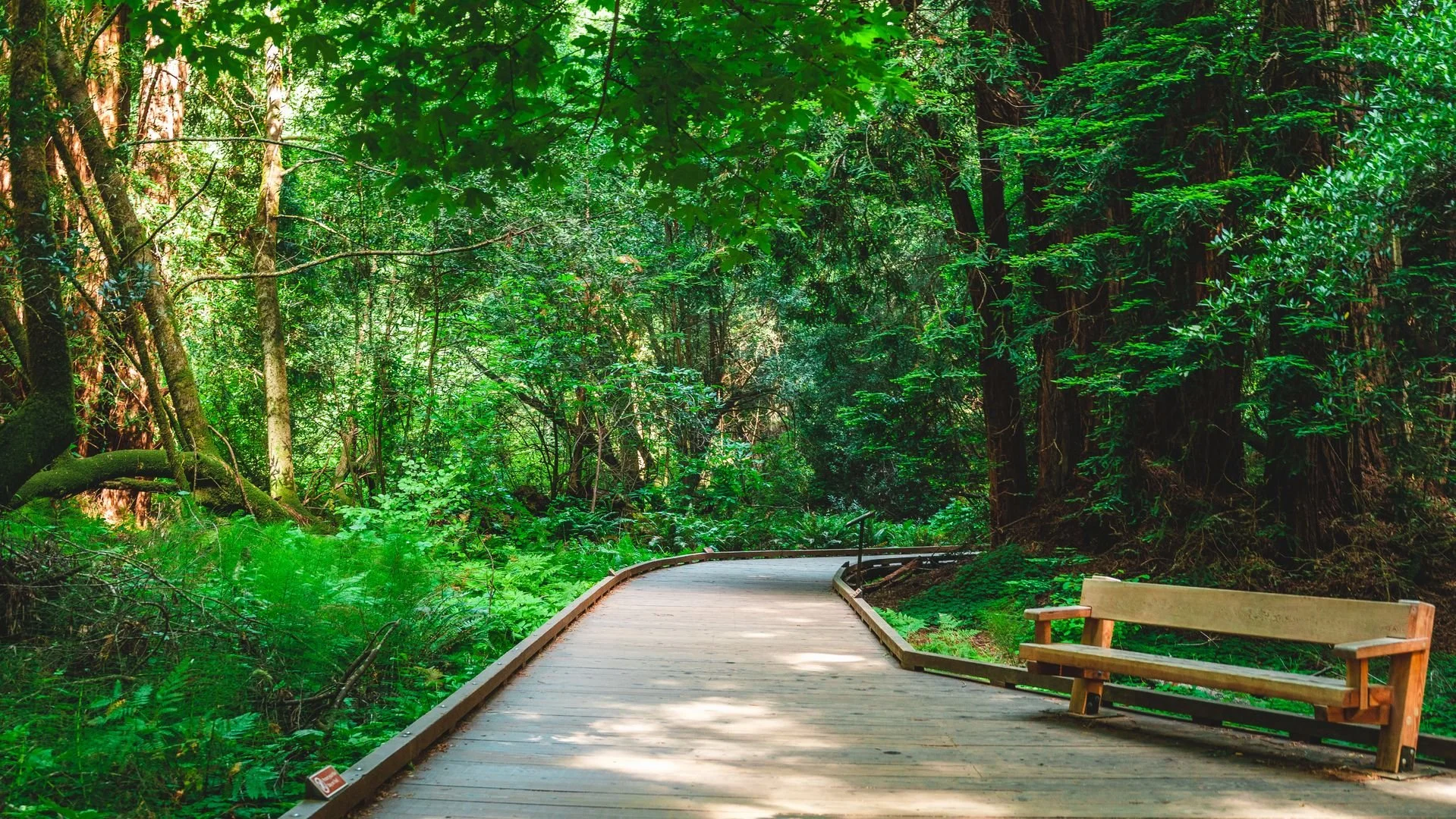
"Go outside" is easy advice to wave off. It sounds too simple to matter, the kind of thing suggested by someone who has not seen your week.
It holds up better than it sounds. The link between nature and mental health is one of the better-studied findings in the field, and the effect is specific rather than vague: time outside eases the load on your attention, lowers your stress hormones, and quiets the part of the brain that runs repetitive worry. You do not have to feel outdoorsy or believe in it for any of that to work.
The amount of time that shifts mood is smaller than most people expect, and once the reasons behind it are clear, time outside becomes something you can use on purpose instead of stumbling into on a good day.
Table of Contents
- How Does Spending Time in Nature Improve Mental Health?
- Why Does Being Outside Improve Your Mood?
- What Counts as Nature for Mental Health Benefits?
- How Much Time Outside Should You Spend Each Week?
- How to Spend More Time Outside in Alberta
- Practical Tools: How to Get More From Time Outside
- When Should You See a Therapist for Low Mood?
- Nature and Mental Health: Common Questions Answered
How Does Spending Time in Nature Improve Mental Health?
None of this rests on one small study. Spending time in nature is linked to better mood, lower stress, and a higher sense of wellbeing. In the largest study to date, a 2019 study in Scientific Reports of nearly 20,000 people in England found that people who spent at least 120 minutes a week in natural settings were significantly more likely to report good health and high wellbeing than people who spent none.
How Much Time in Nature Do You Need for Better Mental Health?
The two-hour figure matters because it behaved like a threshold. Below 120 minutes a week, people showed no measurable benefit. At or above it, they did. The finding held across age, income, health status, and whether someone lived in a green area or a built-up one.
Two hours a week comes out to about seventeen minutes a day. That is a coffee on the back step, part of a lunch break, or the long way home from parking the car. It is a smaller ask than most wellbeing advice, and it does not depend on fitness, money, or a particular kind of scenery.
Can You Split Your Time in Nature Across the Week?
The same study found it made no difference whether people got their 120 minutes in one long visit or in several short ones through the week. A single Saturday hike and a handful of ten-minute walks landed in the same place.
This is good news for anyone whose week does not have a free half-day in it. The time can be banked in pieces, which means it can fit around work, appointments, and kids rather than competing with them.
Why Does Being Outside Improve Your Mood?
Several separate mechanisms drive the mood effect, and they stack. Understanding them makes the habit easier to keep, because you can see what the time is actually buying you.
Nature Gives Your Attention a Rest
Most of the day runs on what psychologists call directed attention: the effortful focus you use to answer email, sit in traffic, or follow a meeting. It is a limited resource, and when it runs low you get the familiar signs of mental fatigue, short patience, trouble concentrating, and a shorter fuse at home.
Attention Restoration Theory, developed by Rachel and Stephen Kaplan, explains why nature helps here. Natural settings hold your attention gently, without demanding it. Moving water, wind in trees, and shifting light pull at you softly, which lets the effortful system rest and recover. A city street does the opposite; it keeps you scanning, deciding, and reacting. This is why ten minutes in a park can feel more restful than ten minutes on a busy sidewalk, even at the same pace.
Time Outside Lowers the Body's Stress Load
Time outside also acts on the stress system directly. In a 2019 study, researchers publishing in Frontiers in Psychology had people take a short "nature pill" several times a week and measured cortisol, the body's main stress hormone, from saliva samples. Cortisol dropped most efficiently when the nature break lasted between twenty and thirty minutes.
Lower cortisol is not an abstract lab number. Chronically high stress load keeps the body braced, disrupts sleep, and feeds the physical side of anxiety and chronic stress. A short, regular drop in that load is part of why people come back from a walk feeling less wound up in their body, not only calmer in their head.
Time Outside Interrupts the Overthinking Loop
One of the most striking findings is also the most relevant to low mood. In a 2015 study published in PNAS, Stanford researchers had people take a ninety-minute walk in either a natural or an urban setting. The nature group reported less rumination afterward, and brain scans showed reduced activity in the subgenual prefrontal cortex, a region tied to repetitive, self-critical thinking and to depression risk.
Rumination, the loop of turning the same worry or self-judgment over and over, is one of the strongest drivers of both anxiety and depression. Talking yourself out of it rarely works, because the loop is not really about logic. What the research suggests is that a change of environment can quiet it at the level of the brain, without you having to argue with the thought at all.
How Natural Light, Movement, and Sleep Affect Mental Health
Two more ordinary factors ride along with time outside. Daylight, especially in the morning, helps set the body clock, which supports steadier mood and better sleep that night. And most outdoor time involves at least some movement, which has its own well-established effect on depression and anxiety.
None of these needs to be optimized. Getting outside tends to deliver light, movement, and a break from screens at the same time, which is part of why the effect is larger than any single one of them would predict.
What Counts as Nature for Mental Health Benefits?
A common reason people skip this is a quiet belief that it only counts if it is dramatic: a mountain, a forest, a lake. The research does not support that bar, and holding it usually means doing nothing instead.
Green Space Close to Home
In the 120-minute study, ordinary local green space did the work: town parks, tree-lined streets, playing fields, and country paths. The benefit did not require travel or wilderness. A neighbourhood park you can reach on foot is often more useful than a spectacular spot two hours away, because you will actually go.
Does Being Near Water Improve Mental Health?
Settings with water, sometimes called blue space, tend to score especially well for stress relief. A riverbank, a lakeshore, or a walk along a pond gives the same soft, undemanding input that rests your attention, often a little more strongly. If a green route and a water route are equally handy, the water one is a reasonable default.
Can Simply Looking at Nature Improve Mental Health?
At the low end, even looking at nature does something. A well-known 1984 hospital study by environmental researcher Roger Ulrich found that surgery patients in rooms with a view of trees recovered faster and needed less pain medication than those facing a brick wall. A window seat facing a park, or a few minutes on a balcony, is not the same as a walk, but it is not nothing either.
How Much Time Outside Should You Spend Each Week?
The dose from the research is easy to remember, which is part of why it is worth following instead of guessing.
Aim for About Two Hours Each Week
The two numbers from the research combine into one rule. The wellbeing benefit showed up at about two hours a week, and stress relief came most efficiently in blocks of twenty to thirty minutes. Put them together and it comes to this: get outside most days for twenty minutes or so, and let it add up.
A Canadian program has built its advice on exactly this. PaRx, a nature-prescription program started by the BC Parks Foundation, has doctors across the country write prescriptions for time outdoors, recommending about two hours a week in blocks of at least twenty minutes. It is one of the few wellbeing recommendations concrete enough for a physician to prescribe.
Signs You May Need More Time Outside
There is no deficiency test for this, but a few patterns tend to travel together: feeling wired but tired, a short fuse by late afternoon, trouble settling your attention, and days that pass entirely between a screen and four walls. In clinical practice, we often see people who have slowly stopped going outside without noticing, usually during a stretch of stress or burnout when it felt like the least important thing to protect.
How to Spend More Time Outside in Alberta
Alberta makes this both easy and hard, depending on the month, so it helps to plan around the seasons rather than fighting them.
Spring, Summer, and Fall in Alberta
From late spring through early fall, the province does much of the work for you. Edmonton's river valley, Calgary's pathway system, the foothills, and countless prairie trails put green and blue space within reach of most people. Long daylight hours in summer make it realistic to get outside after work, not only on weekends. This is the stretch to build the habit, so it holds when the weather turns.
Getting Enough Natural Light During an Alberta Winter
Alberta winters are the real test, and they are also when time outside matters most. Short days mean less light exposure, which is tied to lower mood and, for some people, to seasonal affective patterns. Getting outside near midday, even bundled up for ten or fifteen minutes, delivers far more light than any indoor room and helps steady both mood and sleep. It will not feel like a summer walk, and it still counts. On the coldest days, a bright window, a short balcony break, or a drive to a plowed river-valley lookout keeps some of the benefit within reach.
Practical Tools: How to Get More From Time Outside
Most advice stops at "go for a walk." The difference between time outside that shifts your mood and time that barely registers comes down to a few specific choices: what kind of setting, where your attention goes, and when in the day you do it. Each tool below is built on one of the mechanisms above, so each is doing a particular job.
Match the Outdoor Time to What's Draining You
Not all time outside does the same thing, so it helps to aim it. When your focus is fried and you cannot concentrate, you need restoration rather than exertion: find a spot with a soft, open view and let your eyes rest on it for ten minutes with no task attached. When your body is wired and stress is high, give it a slower twenty to thirty minute block, the window where cortisol falls most efficiently. When you are stuck circling the same thought, take a walk somewhere green, the same kind of nature walk that lowered rumination in the Stanford study.
The point is to treat the three states differently. A five-minute glance at a view will not settle a stress response, and a brisk errand-walk will not rest a tired mind. Aim the tool at the problem and the same minutes do more.
Choose Quiet Green Spaces and Put Your Phone Away
Attention Restoration Theory draws a line between soft fascination, the gentle pull of moving water, leaves, or a wide view, and the hard, demanding kind you get from a crowded patio or a busy roadside path. Only the soft kind lets directed attention rest, because it holds your gaze without asking anything of you. Given a choice, pick the quiet tree line over the busy scene, even when the busy one is technically outdoors.
Then leave the phone in your pocket and skip the podcast. Photographing the moment to post it, or piping in audio, re-recruits the exact effortful attention you came out to rest. The walk works because, for once, nothing is asking for your focus.
Take an Awe Walk
Awe is one of the few states that turns down self-focus from the outside, and self-focus is the engine underneath rumination. In a 2020 study in the journal Emotion, older adults who took a weekly fifteen-minute "awe walk" for eight weeks reported more positive emotion and less daily distress than those who took ordinary walks. Researchers tie the effect to the "small self," the sense of being a small part of something larger, which quiets the self-focused thinking that feeds anxiety and low mood.
To do it, pick a route with something vast in it: a big sky, old trees, a wide view, a river. As you walk, move your attention onto the scale and age of what you are seeing, and let it be bigger and older than whatever you carried out the door. The under-five-minute version is an awe glance: find the largest, oldest thing in sight and give it one slow, full minute. When a problem feels oversized, stand next to something that has been there far longer, and let it take up more of your attention than the problem does.
Get Outside in the Morning for the Greatest Benefit
If you only protect one outdoor block, make it a morning one. Ten to twenty minutes of outdoor light within an hour or two of waking gives the strongest push to your body clock, which supports steadier mood through the day and easier sleep that night. A short walk around the block, a few minutes on the porch, or standing outside while the kettle boils is enough. The light does the work, so the bar is only that you are outside and not behind glass.
When Should You See a Therapist for Low Mood?
Time outside helps, and it has limits. When low mood, anxiety, or exhaustion lasts for weeks, gets in the way of work or relationships, or does not lift with the ordinary things that used to help, that is worth taking seriously rather than waiting out. Our therapists work with people across Alberta using approaches like cognitive behavioural therapy and acceptance and commitment therapy, both of which pair well with the behavioural changes described here. Support is available whether you are in Calgary, Edmonton, or a smaller community, and starting a conversation does not commit you to anything beyond it.
None of this asks for much. A walk before the day gets going, a lunch eaten outside, ten minutes by the water instead of at a desk, repeated most days, adds up to the two hours the research points to. In Red Deer, Lethbridge, or on a tree-lined street in any Alberta neighbourhood, it is one of the few supports that costs nothing and is already close by.
Nature and Mental Health: Common Questions Answered
Does time in nature help with depression, or just stress?
It helps with both. For low mood, the main routes are reduced rumination, more daylight, and the gentle activity that usually comes with being outside, each of which has its own effect on depression. It works best as a support alongside treatment rather than on its own, especially for depression that has lasted weeks or is affecting daily life. For milder, situational low mood, regular time outside can make a real difference by itself.
How long does it take to feel the benefits of time in nature?
Some of it is quick. A calmer body and a clearer head can show up within about twenty minutes, the window where stress hormones start to drop. The steadier lift in mood and wellbeing builds over weeks of getting outside regularly, at roughly two hours a week. So one walk can help today, and the larger effect comes from repeating it.
Why does being outside make me feel better?
Being outside works on several systems at once. It rests the effortful, focused attention you use all day, lowers the stress hormone cortisol, and reduces activity in the brain region tied to repetitive negative thinking. Add in daylight and a little movement, and the result is a real shift in how you feel, even when nothing about your situation has changed.
Does gardening or sitting in the backyard count as time in nature?
Yes. The research counts everyday green space, so a backyard, a balcony with plants, or time spent gardening all add to your weekly total. Gardening has a little extra going for it, because it adds light activity and the sense of tending something, both of which support mood. You do not need a park or a trail for it to count.
Does spending time outside help you sleep?
It can, mostly through light. Getting outdoor light early in the day helps set your body clock, which tends to make it easier to fall asleep and improves sleep quality that night. Outdoor light is far brighter than indoor lighting, so even a short morning walk sends a stronger signal than sitting by a window. Evening screens and late caffeine still matter, but daytime light is one of the simpler levers for better sleep.
Does time outside still help during the winter?
Yes, and in some ways it matters more. Short winter days mean less light exposure, which is linked to lower mood and seasonal patterns for some people. Getting outside near midday, even briefly and heavily bundled, delivers far more light than any indoor space and supports both mood and sleep. The benefit does not require warm weather, only daylight and a few minutes outside.
Educational Disclaimer:
This article is for educational purposes only and is not a substitute for professional medical advice, diagnosis, or treatment. If you're experiencing mental health concerns that interfere with your daily functioning, please reach out to a qualified mental health professional. If you're in crisis, contact your local crisis line or emergency services immediately.
