Couples Counselling in Alberta
Something between you has shifted, and you both feel it.
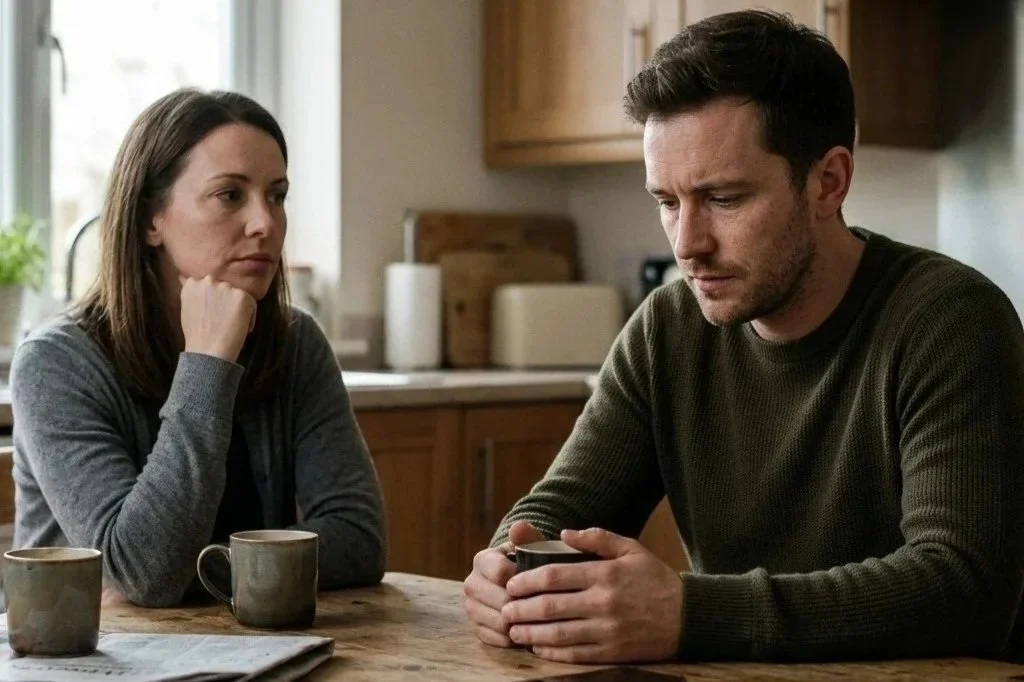
You still share a home, a schedule, a life. But the ease that used to exist between you has been replaced by something harder to name: a distance that grows during arguments, or a silence that follows them for days. The conversations that used to matter now feel risky to start, so you move around each other instead.
Couples counselling gives you a structured way to understand what is breaking down between you and what it would take to change it.

Alberta
insurance plans
required
Does This Sound Familiar?
Depression shows up differently for everyone. You might notice...
Loss of Interest
Things you used to look forward to no longer hold any appeal.
Persistent Low Energy
Basic tasks take more out of you than they reasonably should.
Harsh Inner Critic
Your thoughts run on a loop of criticism or hopelessness.
Pulling Away from People
Being around others requires more than you currently have.
Difficulty Concentrating
Reading, following a conversation, or finishing tasks feels harder.
Sleep That Does Not Restore
Waking up does not bring the reset you need.
What is Couples Counselling?
Relationship distress is more than poor communication.
Couples counselling is structured clinical work focused on the patterns that create and maintain conflict, disconnection, and emotional distance in a relationship. A therapist works with both partners to identify how they each contribute to recurring cycles, what drives those cycles, and what it would take to interrupt them.
Treatment focuses on identifying the specific interaction patterns that keep conflict unresolved: who escalates, who withdraws, what triggers each partner, and how unspoken expectations shape daily life.
Relationship distress tends to become most acute during high-pressure periods, but is almost always driven by dynamics that have been building for years, affecting how both partners function individually as well as together.
Negative Interaction Cycles
Partners become locked into reactive patterns that escalate or shut down every attempt at resolution.
Each partner's response makes sense from their own perspective. But together, those responses create a loop that reinforces itself every time it runs, making the next cycle harder to interrupt.
Unmet Attachment Needs
Unaddressed needs for security, closeness, or autonomy drive conflict without either partner fully recognising it.
When attachment needs go unnamed, they surface as irritability, withdrawal, or demands that seem disproportionate. Partners respond to the visible behaviour rather than the underlying need.
Learned Communication Patterns
The way partners express and receive information has developed habits that block genuine understanding.
Poor communication is rarely about effort. It is rooted in how each person learned to handle conflict before this relationship. Without identifying those patterns, couples repeat the same unproductive conversations.
Why Self-Management Has Limits
Two people inside a distressed relationship cannot objectively observe the dynamic they are both caught in.
A skilled therapist can see the pattern both partners are producing together, name it clearly, and introduce structured ways to interrupt it. Trying harder within the same dynamic tends to reinforce existing patterns rather than change them.
No formal diagnosis is required. If your relationship is causing you significant distress, that is sufficient reason to seek support.

Most couples wait far longer than they should before reaching out.
A free consultation is a straightforward way to find out whether therapy makes sense for your relationship.
Types of Relationship Issues We Treat in Alberta
Relationship distress shows up in different ways. We can help.
Couples seek counselling for many different reasons, and no two situations are alike.
No label or diagnosis is required. If your relationship is a source of significant distress, that is enough.
Communication Breakdown
Conversations that go in circles, end in silence, or escalate before anything is resolved.
Infidelity and Betrayal
Rebuilding trust after an affair, emotional betrayal, or a significant breach of honesty.
Emotional Disconnection
A persistent sense of distance not connected to any single identifiable cause.
Conflict and Chronic Anger
Frequent or intense arguments that leave both partners feeling worse than before they started.
Intimacy and Sexual Concerns
Changes in closeness, differences in desire, or conversations about intimacy that feel too difficult to start.
Life Transitions and Stress
Relationship strain from a new child, a move, job loss, serious illness, or grief.
Separation and Divorce Decisions
Couples unsure whether to stay or separate, seeking clarity before making that decision.
Blended Family Challenges
Pressures from combining families, co-parenting dynamics, and step-parent relationships.
Not sure which of these applies to you?
Many couples arrive without a clear label for what is wrong. What matters is that something is not working.
How Couples Counselling Helps
Therapy helps you change the patterns keeping conflict and disconnection in place.
The goal of couples counselling is not to eliminate disagreement or manufacture harmony. It is to give both partners a clearer understanding of what is driving their dynamic, and the ability to interrupt the patterns causing the most damage.
Effective couples therapy reduces the frequency and intensity of destructive conflict cycles and increases each partner's ability to be heard, to genuinely listen, and to repair after disagreement.
Identifying Your Relationship Pattern
Your therapist maps the cycle your relationship is caught in: who moves toward conflict, who withdraws, and how those responses reinforce each other.
Slowing the Cycle Down
You develop the ability to recognise the pattern as it is happening. That recognition creates a pause, and the pause creates a different possible response.
Accessing What Actually Matters
Therapy creates conditions where underlying needs can be expressed without triggering defensiveness, which changes the nature of the conversation entirely.
Rebuilding Communication
Couples work on speaking and listening in ways that actually reach the other person, including repairing after conflict, not only preventing it.
Sustaining Change
Your therapist helps you consolidate changes and identify early warning signs before old patterns return to daily life.

When conflict and emotional distance become the daily experience of a relationship, therapy gives both partners the tools to change what is happening between them, not just manage it.
Why Choose The Mental Health Clinic for Couples Support
Experienced therapists. Real support. Lasting change.
Effective couples counselling requires a therapist who can hold two different perspectives simultaneously, track a complex relational dynamic in real time, and offer interventions that neither partner experiences as taking sides. That is a specific clinical skill set, and it develops over years of practice, not months.
Experienced Alberta Therapists
Minimum 10 years of clinical experience. No newly registered therapists. Manageable caseloads so each couple receives the attention their situation requires.
Evidence-Based Care
Proven, research-supported approaches to couples work. No techniques without a clinical evidence base. No methods chosen because they are popular.
Personalised Treatment
Built around the specific dynamics of your relationship: your history, your goals, and the patterns unique to you. Not a generic couples program applied uniformly.
No Waitlists
Evening and weekend appointments available. When you are ready to start, you will not be placed on a list and asked to wait.
Online Across Alberta
All sessions by secure video or telephone. Rural and remote communities across Alberta have full access to the same quality of care.
Insurance-Friendly
Most extended health plans accepted. Receipts provided for all sessions. No referral required to book.
Our Team of Alberta Therapists Are Here to Support You
-

AMY
-

KAREN
-

RONALD
-

SAMANTHA
What to Expect
Here is what working with us actually looks like, from your first call through to lasting change.
Free 20-Minute Consultation
We’ll talk about what you're experiencing and see if we're the right fit.
Personalized Treatment Plan
Together we create a plan tailored to your goals, symptoms, and what you want to change.
Therapy Sessions That Work
We use proven, evidence-informed approaches to help you feel better and build real skills.
Ongoing Support and Growth
As you improve, we help you maintain progress and prevent setbacks, so change lasts.
Therapy is not one-size-fits-all. Your plan is built around you.
Frequently Asked Questions About Couples Counselling
-
Both partners need to attend and engage honestly, but they do not need to arrive with equal certainty that the relationship can be repaired. It is common for one partner to be more ambivalent than the other, and that alone does not prevent meaningful progress. What tends to limit outcomes is not ambivalence but a complete unwillingness to engage with the process. Your therapist will assess where both partners are in the early sessions and work with what is actually in the room.
-
Individual therapy is often the right place to start. Working one-on-one first gives you a space to process what has been building in the relationship, clarify what you actually want, and develop the capacity to engage in couples sessions productively when the time comes. It also removes the pressure of beginning couples work when one partner is not yet willing, which can make early sessions more volatile than useful. Some couples find that one partner starting individual therapy creates enough shift in the dynamic that the other becomes more open over time.
-
Couples counselling is not only for partners who have decided to remain in the relationship. Some couples use therapy to gain enough clarity to make that decision thoughtfully rather than reactively, or in crisis. Whether you are working to repair your relationship, understand your options, or separate with less damage, therapy can help you get there with more information.
-
Yes. Unresolved events, whether a betrayal, a loss, or a significant conflict, frequently sit at the root of current distress even when the original incident feels distant. A therapist can help you revisit those events in a structured way that allows both partners to be heard without the conversation deteriorating. Addressing the past is often necessary to change what is happening now.
-
Previous therapy that did not produce results is one of the most common reasons couples hesitate, and it is worth raising directly in your consultation. Outcomes depend substantially on therapist experience, the fit between the therapist's approach and your specific dynamic, and the stage at which couples seek help. A different therapist with more relevant experience can reach a couple that an earlier approach could not.
-
We are a private practice. Session fees are paid at the time of your appointment and we provide a receipt you can submit directly to your insurance provider for reimbursement. Coverage for couples counselling varies more than individual therapy, as some plans cover it fully, some partially, and some require that sessions be billed under an individual's mental health benefits rather than as couples therapy specifically. We recommend confirming your coverage with your provider before booking, and we are happy to answer any questions about how our sessions are structured that might help that conversation.