Parasocial Relationships: AI Companions, Influencers, and Mental Health
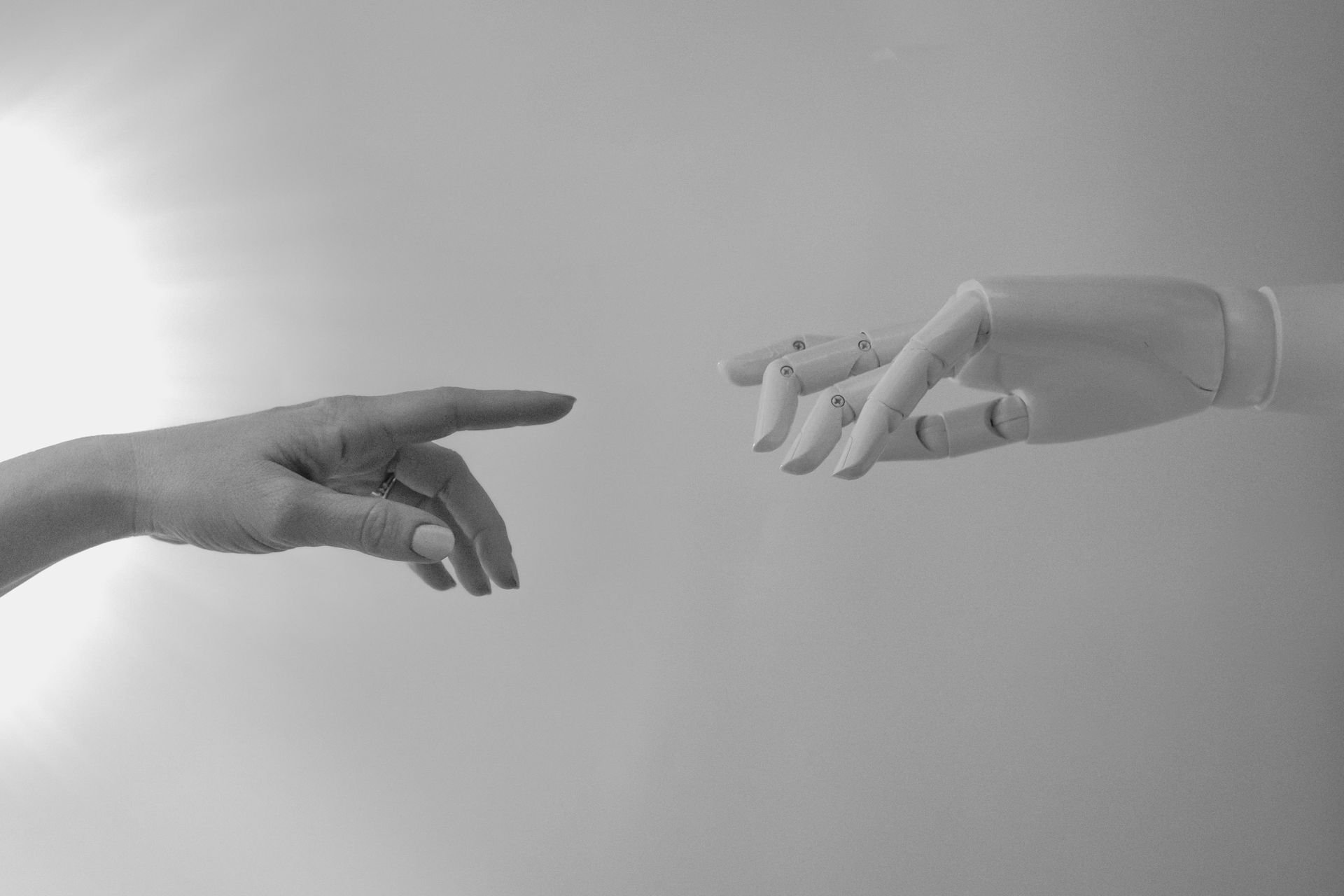
Photo by: Tara Winstead
It's common to feel you know someone you've never met. It might be the podcast host who keeps you company on the drive to work, the streamer you have on most evenings, or the creator whose kitchen looks almost as familiar as your own.
Cambridge Dictionary named "parasocial" its 2025 Word of the Year, pointing to growing interest in one-sided bonds. These are bonds with someone who doesn't know you. They now run from influencers and celebrities to fictional characters and AI chatbots that answer back.
At The Mental Health Clinic, these bonds come up in our work with teens, adults, and couples across Alberta by telephone and video, often in conversations about loneliness, grief, or a partner's screen habits.
Research links these bonds both to better wellbeing and to problematic social media use. Knowing why the brain forms them, and which signs suggest one has started to crowd out the rest of your life, makes it easier to tell which way yours is leaning.
Table of Contents
- What is a Parasocial Relationship?
- Who Do People Form Parasocial Relationships With?
- Why Do We Feel So Close to People We've Never Met?
- Are Parasocial Relationships Healthy? Benefits and Risks
- Parasocial Relationships With AI Companions
- Parasocial Grief: When a Celebrity Dies or a Creator Quits
- Parasocial Relationships in Teens and Romantic Relationships
- How to Manage a Parasocial Relationship That is Taking Over
- When a Parasocial Relationship May Signal an Underlying Concern
- Can Therapy in Alberta Help When One-Sided Bonds Take Over?
- Frequently Asked Questions About Parasocial Relationships
What is a Parasocial Relationship?
A parasocial relationship is a one-sided emotional bond with someone you know through a screen or speaker. That might be an influencer, a celebrity, a fictional character, or an AI chatbot. You feel you know them and care about them, but they don't know you. Research links these bonds to both benefits and risks.
Parasocial Interaction vs a Parasocial Relationship
Researchers separate two experiences. A parasocial interaction is the feeling of connection in the moment, while you're watching or listening. It's that sense that a creator is talking straight to you during a live stream.
A parasocial relationship is the bond that lasts after the screen goes off. You think about the person between videos, you'd notice if they disappeared, and they hold a steady place in your week.
A 2026 review in JMIR Mental Health by Yixuan Li, Zihao Liu, and Fangqing Liu describes the relationship as lasting and emotionally charged. The interaction is the shorter, moment-to-moment feeling.
Fandom vs a Parasocial Relationship
Being a fan is about enjoying someone's work. You love the music, the games, or the show, and you talk about it with other fans.
A one-sided bond is more personal. The focus moves from the work to the person, and it starts to feel like friendship: you know their pets' names, you worry when they look tired, and their good news feels like good news in your own life. The two can overlap.
Where Did the Term Parasocial Come From?
The term goes back to 1956. Two sociologists at the University of Chicago, Donald Horton and Richard Wohl, used it to describe how TV viewers bonded with the hosts and stars that television brought into their homes.
Seventy years later, the word has moved from research papers into everyday speech. When Cambridge named it Word of the Year, it pointed to rising interest in one-sided bonds with influencers and AI chatbots. Its definition now includes AI alongside famous people and fictional characters.
Who Do People Form Parasocial Relationships With?
Influencers, YouTubers, and Live Streamers
Online creators post often, share their daily lives, and speak to the camera as if it were one person.
Live streaming adds something earlier media never had: the creator may read your comment out loud or thank you by name. The Li review describes how personal sharing, behind-the-scenes access, and live streams make a creator feel available and responsive. Recommendation feeds keep putting the same faces in front of you.
Celebrities, Musicians, Athletes, and Podcast Hosts
Musicians can feel especially close, and in therapy people often connect a favourite artist to a specific chapter of their own life.
Podcast hosts are easy to underestimate. You hear their voice in your ears for hours a week, often while doing something ordinary, which can make the connection feel like a standing friendship. Radio and television hosts can play the same role for older adults.
Fictional Characters
People form real attachments to characters in books, shows, and games. Cambridge's definition of parasocial includes them. Finishing a long series can bring a sense of loss, even though the character never existed.
Mental Health Influencers
Creators who talk about anxiety, ADHD, trauma, or relationships deserve a separate mention. Their content can be validating, and it can help people find words for what they're going through.
The closeness can also come with a lot of trust. When a creator feels like a friend who gets you, their take on your symptoms can start to feel like an assessment. General content can't account for your history, your health, or other things that might explain how you feel. That's where a one-on-one assessment with a professional matters.
AI Chatbots and Companion Apps
AI chatbots and companion apps are a newer focus for these bonds. They differ from every other example here because they reply. That one feature changes things enough that AI gets its own section below.
Why Do We Feel So Close to People We've Never Met?
We feel close to people we've never met because frequent contact, personal details, and constant availability build a sense of familiarity, whether or not the other person knows us. Creators share their daily lives and speak directly to the camera, so time spent watching can feel like time spent together.
How Repeated Exposure Creates Familiarity
Seeing the same face several times a week builds a sense of shared history, since you were there for the move, the breakup, and the new puppy. The Li review notes that recommendation feeds make this exposure frequent and tailored to you.
Personal Sharing and Direct Communication
The Li review points to sharing personal details as one way creators build a sense of closeness. Creators share a lot: their bad days, their health, their family conflicts. It can feel like being trusted with something, which pulls you closer.
Talking straight to the camera adds to the effect. Horton and Wohl were describing hosts who appeared in viewers' living rooms through a television set; creators now film in their own bedrooms and speak to "you."
Constant Availability and the Appeal of One-Sided Bonds
A one-sided bond asks very little. The creator posts on schedule, is in a good mood on camera most of the time, and never cancels plans, criticizes you, or needs anything back.
For someone who is tired, anxious, or recently hurt by people, that low-risk availability can be part of the appeal. Research led by Shaaba Lotun at the University of Essex notes that people tend to see human qualities in non-human things when they feel disconnected from others.
How Loneliness and Life Changes Can Shape Parasocial Bonds
These bonds can grow during times when two-way connection is harder to come by: after a move, a breakup, a new baby, a job change, or retirement. The Li review suggests some people may lean on these bonds to meet a need for belonging. That includes people with little face-to-face contact, social anxiety, minority status, or limited access to a community.
In therapy, clients sometimes realize a creator's videos became a daily habit during a hard stretch in their life. Looking back, the habit can show what they needed during that stretch.
Are Parasocial Relationships Healthy? Benefits and Risks
Parasocial relationships can be healthy. A 2026 review found they were linked to better wellbeing and also to problematic social media use, with the links to wellbeing generally stronger. Researchers call them a double-edged sword. The real question is how a bond fits into the rest of your life.
What Are the Benefits of Parasocial Relationships?
The Lotun team ran three studies with about 3,000 participants, most of them young adults. People rated their strongest one-sided bonds as better at meeting their emotional needs than acquaintances. Close friends and family still came out ahead. These were ratings of how well the bonds felt like they worked, so they don't measure the real effect.
For people from minority groups, or anyone who doesn't see themselves reflected in their local community, seeing someone like them online can matter a great deal. In clinical practice, fan communities sometimes become a bridge to two-way friendships, since the creator gives people something to bond over together.
What Research Says About the Benefits and Risks
The Li review pooled 17 studies. Strong bonds with influencers were linked to better wellbeing (and, less consistently, self-esteem). They were also linked to problematic social media use. The authors called it "a psychological double-edged sword." There was no clear link with general distress.
Two details stand out. The links were stronger for the in-the-moment experience than for longer-term bonds. They were also stronger in teens than in adults, though only a few studies looked at teens. Most studies measured people at a single point in time, so they can't show what causes what.
The Lotun team also pointed to limits. A creator can't adjust to what you need on a given day, so the comfort they offer stays the same whether you're having a hard week or a crisis. The authors put it simply: a favourite character can only cheer you up with the same joke so many times.
Signs a Parasocial Relationship Is Affecting Your Life
There's no simple cut-off for when a bond has gone too far. The question clinicians usually ask is whether the bond is adding to your life or replacing parts of it. These patterns suggest it may be replacing:
Two-way relationships are shrinking: you turn down plans to watch a stream, or friends feel less rewarding than the creator.
You believe the connection is mutual: you feel the creator is speaking to you specifically, or that they'd want to know you.
Money is involved beyond what you can afford: subscriptions, donations, paid messages, or merchandise bought to feel closer.
Sleep, work, or school are suffering because of time spent watching or chatting.
Your mood depends on their choices: their new partner, a hiatus, or a comment you disagree with leaves you distressed for days.
You defend them in ways that cost you, including arguments with friends or online fights.
You trust their advice on health, money, or relationships over people who know your situation.
At the far end of the range, researchers use the term celebrity worship for an intense preoccupation with a famous person that takes over daily life. If that sounds familiar, it's worth talking to a professional.
Celebrity Crushes and Romantic Parasocial Relationships
A celebrity crush can be harmless fun. A romantic one-sided bond becomes a concern when it starts to shape real decisions: avoiding dating because no one compares, comparing a partner to a creator, or feeling jealous of the creator's real relationships.
In couples work, a celebrity crush sometimes opens a conversation about attention, playfulness, or feeling desired, which the couple can then work on together.
Parasocial Relationships With AI Companions
A parasocial relationship with AI is a one-sided emotional bond with a chatbot or companion app. Unlike a celebrity, the AI responds, remembers details, and is there at any hour, which may make the bond feel closer. Early research suggests heavier use may be linked to more loneliness and emotional dependence.
How AI Companions Differ From Influencers
An influencer will never answer your 2 a.m. message. An AI companion will, instantly, in a warm tone, and it may remember what you told it last week. It won't get tired of you or have its own bad day.
Those features make AI feel reciprocal, even though it isn't a person with needs of its own. The relationship still runs in one direction, and the "other side" is a product built by a company.
What Early Research Shows About AI Companions and Loneliness
A 2025 study from the MIT Media Lab and OpenAI followed 981 adults in the United States for four weeks as they used ChatGPT, with participants averaging about five minutes a day. People who chose to use the chatbot more reported more loneliness, less socializing with other people, more emotional dependence on the AI, and more problematic use.
People who trusted the chatbot more and felt more socially drawn to it were also more emotionally dependent on it.
The study has limits. It was shared as a preprint and has not yet been peer reviewed, several authors work at OpenAI, and because people chose how much to use the chatbot, the results show association. Lonely people may use AI more, AI use may add to loneliness, or both may be true.
Canadians are turning to AI for support as well. A 2026 national poll by the Mental Health Commission of Canada and Mental Health Research Canada found about 1 in 7 people in Canada had used an AI mental health tool in the past year, rising to 27% of adults under 35. Only 14% said they trust AI tools.
Teens are using AI companions widely. A 2025 national survey of US teens aged 13 to 17 by Common Sense Media found nearly three in four had used an AI companion and about half used one regularly.
Among teens who used them, about a third had chosen an AI companion over a person for a serious conversation, and about a quarter had shared personal information with one.
When an AI Companion Starts Replacing Human Connection
Using AI for company is not automatically a problem. The concern grows when AI becomes the first and only place you take hard feelings, when talking to people starts to feel like too much effort by comparison, or when you feel anxious or low if you can't reach the app.
Clients sometimes describe AI as "easier than people," and in the moment it can be. People can offer things a chatbot can't: a friend who notices you've gone quiet, shows up with food, or tells you something you don't want to hear.
Parasocial Grief: When a Celebrity Dies or a Creator Quits
Why You Can Grieve Someone You Never Met
When a celebrity dies, a long-running show ends, or a creator stops posting, the grief can be surprisingly strong. The Lotun team notes that losing one of these bonds can lead to real grief, which fits what we see in therapy.
Even though the relationship ran one way, the loss is concrete: you lose a routine, a source of comfort, and often a connection to who you were when you first found them. A musician's death can feel like losing part of your teenage years.
This kind of grief can be lonely because others may not take it seriously. Hearing "you didn't even know them" can make someone hide what they feel and grieve on their own.
Feeling Betrayed When a Creator Lets You Down
Sometimes the loss is a rupture rather than a death. A creator is caught in a scandal, says something hurtful, or turns out to be very different off camera. Clients describe feeling betrayed, foolish, or embarrassed for having cared.
Those feelings make sense. You invested time, trust, and sometimes money in someone who seemed to share your values. It can help to separate what was real (your enjoyment, the comfort, the community) from what you didn't know about them, so the whole period doesn't feel wasted.
Parasocial Relationships in Teens and Romantic Relationships
Why Teens May Be More Vulnerable to Parasocial Influences
Adolescence is when people work out who they are, and creators can offer ready-made models for how to look, talk, dress, and think. The Li review found these bonds had their strongest links with outcomes in teens, for better and for worse.
For teens, AI companions add another layer, because they reply, remember, and are available at any hour while teens are still learning how two-way relationships work. Based on its survey findings, Common Sense states that no one under 18 should use AI companion platforms.
How Parents Can Talk to Teens About Influencers and AI
Start with curiosity about the creator rather than criticism. Ask what they like about the person, what they've learned from them, and how they feel after watching.
For AI, ask what they use it for and whether it has ever said anything strange. Families can agree on practical limits together, such as no devices in bedrooms overnight or no sharing of personal details with apps. A teen who feels judged may keep using the app and simply stop telling you about it.
When a Partner Becomes Attached to an Influencer or AI Companion
A partner's intense interest in a streamer or influencer can stir up jealousy, especially if it involves late nights, paid messages, or comparisons. With AI companions, couples now bring a newer question to therapy: is a romantic or intimate chat with an AI a form of cheating?
There's no single answer, because couples draw lines differently. The more useful question is what the AI conversation provides that feels missing between the two of you, and whether it was kept secret. If trust has been shaken, it can help to talk about it in the same way couples work through other breaches of agreement in relationships.
How to Manage a Parasocial Relationship That is Taking Over
The aim is to keep what the bond gives you while making sure two-way relationships get the time and attention they need. Cutting someone off completely is rarely necessary. These three tools draw on cognitive behavioural therapy (CBT), acceptance and commitment therapy (ACT), and planning methods used in behaviour change.
The Need-Mapping Exercise: A Step-by-Step Guide
This exercise uses a CBT method called functional analysis, which looks at what a behaviour does for you rather than judging it. Do it once over a week.
For seven days, jot a quick note each time you open the app, stream, or chatbot without planning to. Write the time and what you were feeling just before (bored, lonely, anxious, sad, avoiding something).
At the end of the week, look for patterns. You may find the same two or three moments: after work, late at night, or after a conflict.
For each pattern, name the need the bond was meeting. Possible answers include company, calm, a distraction from worry, inspiration, or belonging.
For each need, write one two-way way to meet it. Loneliness after work might become a standing call with a sibling on Tuesdays. Late-night anxiety might become a worry list and a set screen-off time.
Keep the creator or chatbot in your life, and add the two-way option alongside it.
This helps because it replaces a vague goal ("watch less") with a specific need you can meet in more than one way. In ACT terms, it moves attention from the urge to the value underneath it, such as connection or calm.
A When-Then Plan for Reaching a Real Person First
Once you know your pattern, make a when-then plan for the moment it shows up. For example: "When I get home and feel the pull to open the stream, then I'll send one message to a real person first, even if it's just 'how was your day?'"
For AI: "When I want to tell the chatbot about something that upset me, then I'll tell one person a short version first, and use the chatbot after if I still want to."
This works because the decision is made ahead of time, while you're calm, so you don't have to rely on willpower in a low moment. The habit stays, and a two-way contact simply comes first.
The Two-Way Connection Check
After a session of watching, listening, or chatting, take two minutes and ask yourself two questions:
"Did anyone know I was here?"
"Do I feel more connected, or just less alone for now?"
Then do one small reciprocal thing within the next few minutes: reply to a friend's message, comment in a fan community where people talk back, or plan a short call.
This check helps because it names the difference the Lotun team describes: a one-sided bond can comfort you, but it can't adapt to you. Noticing that gap, without judging yourself, makes it easier to fill it on purpose.
When a Parasocial Relationship May Signal an Underlying Concern
Loneliness and Social Anxiety
If a creator or chatbot has become your main source of company, loneliness or social anxiety may be doing the steering. These bonds feel safe because there's no chance of rejection. That same safety can make it easier to put off reaching out to people. Therapy can help here, particularly when anxiety makes reaching out to people feel impossible.
Low Mood and Social Withdrawal
Withdrawing from people and losing interest in things you used to enjoy can be signs of low mood. If more of your time has shifted to a creator or chatbot alongside those changes, the mood itself deserves attention.
When to Seek Prompt Mental Health Assessment
Rarely, a person comes to believe that a celebrity or creator is secretly communicating with them, is in love with them, or is sending them messages through their content. A firm belief like this, held despite clear evidence otherwise, needs a prompt check with a doctor or nurse practitioner. It can be a sign of a medical or mental health condition that can respond to treatment. If you or someone you know is in crisis or thinking about suicide, call or text 9-8-8 at any time.
Can Therapy in Alberta Help When One-Sided Bonds Take Over?
People often feel embarrassed bringing this up. Clients describe guilt about money spent and frustration at not being able to put the phone down. Some feel grief they think they're not allowed to have. Others worry about a teen or partner who seems more attached to a screen than to the people around them.
Counselling can help when a one-sided bond is affecting your sleep, work, school, mood, or relationships. It can also help when you're grieving a celebrity or creator and don't feel understood. You might be worried about how much your teen relies on an AI companion, or a partner's attachment to a creator or chatbot keeps leading to the same argument.
At The Mental Health Clinic, our therapists work with teens, adults, couples, and families across Alberta by telephone and video. We use approaches such as cognitive behavioural therapy (CBT), acceptance and commitment therapy (ACT), and emotionally focused therapy (EFT) for couples counselling. You don't need to wait until it becomes a crisis to talk it through with someone.
Frequently Asked Questions About Parasocial Relationships
Why Am I So Sad About a Celebrity I Never Met?
Grief after a celebrity's death is real. Researchers note that losing a one-sided bond like this can lead to genuine grief. You lose a routine, a source of comfort, and often a link to an important time in your life, even though they never knew you. Because other people may not take this kind of loss seriously, it can feel lonely, and talking about it with someone who understands can help.
Are Parasocial Relationships Bad for Your Mental Health?
Not necessarily. A parasocial relationship is a one-sided bond with someone you know through a screen, such as an influencer, celebrity, or AI chatbot. Research links these bonds to both better wellbeing and problematic social media use, so the effect depends on the role the bond plays in your life. It becomes a concern when it starts costing friends, sleep, money or when the person’s choices leave you upset for days.
How Do I Stop Obsessing Over an Influencer?
Start by noticing when you reach for their content and what you're feeling just before, such as lonely, bored, or anxious. Then find one two-way way to meet that same need, like a standing call with a friend after work. Setting a when-then plan helps: "When I feel the pull to watch, then I'll message one real person first." Unfollowing can help if the content leaves you feeling worse, but you don't have to cut them off completely to rebalance things. Muting notifications is a smaller step that removes the constant prompts to watch.
Can You Have a Parasocial Relationship With AI?
Yes. Cambridge Dictionary's definition of parasocial now includes AI, and many people form emotional bonds with chatbots and companion apps. AI can feel more reciprocal than a celebrity because it replies, remembers, and is always available, but it remains a product rather than a person with needs of its own. Early research found that adults who chose to use a chatbot more reported more loneliness and emotional dependence, though that study hasn't been peer reviewed yet. Using AI for company isn't automatically harmful; the concern is when it becomes your main or only source of support.
Should I Worry About My Teen's Attachment to a YouTuber or Chatbot?
A teen being a devoted fan of a YouTuber is common and often harmless. It's worth paying closer attention if the attachment is pulling them away from friends, affecting sleep or school, involving money, or if they're using an AI companion for serious or private conversations. Common Sense Media recommends that no one under 18 use AI companion apps, and about a quarter of teen users in its 2025 survey had shared personal information with one. Ask open, curious questions rather than mocking the creator or the app. Teens who feel judged may keep using it and stop telling you about it.
When Should I Talk to a Therapist About a Parasocial Relationship?
It’s worth talking to a therapist when the bond is costing you sleep, money, work, school, or relationships, or when a creator’s choices leave you upset for days. Grief after a celebrity’s death that isn’t easing, or an AI companion that has started to replace the people in your life, are also good reasons to reach out.
You don’t need a diagnosis or a crisis to start. Therapy usually looks at what the bond has been giving you, such as company, comfort, or a break from anxiety, and how to get more of that from two-way relationships. Across Alberta, this kind of counselling is available by telephone and video, so where you live doesn’t limit your options.
Educational Disclaimer
This article is for educational purposes only and is not a substitute for professional medical advice, diagnosis, or treatment. If you're experiencing mental health concerns that interfere with your daily functioning, please reach out to a qualified mental health professional. If you're in crisis, contact your local crisis line or emergency services immediately.