
Can a Relationship Recover After Infidelity? What Research Shows
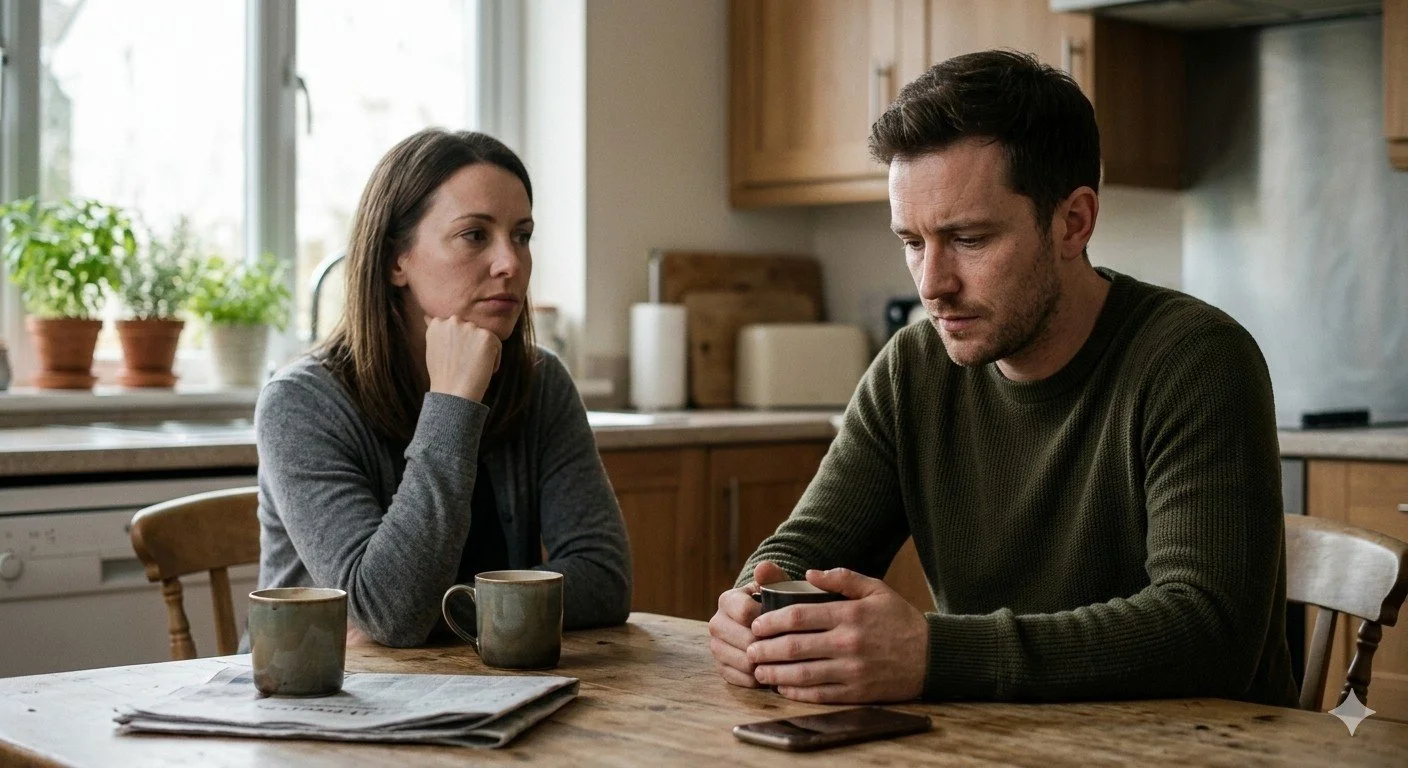
There is a particular moment that many couples describe in therapy: the initial shock has started to lift, the first wave of crisis has settled into something more enduring, and a new question has moved to the centre. Not how did this happen, but: is this fixable?
That question deserves a direct answer, not a reassuring one. Many couples across Alberta reach this point weeks or months after discovering an affair and find that the information available to them is either relentlessly optimistic or catastrophically bleak. Neither is particularly useful.
If you are still in the early shock phase after discovering infidelity, you may find it helpful to first read our article on betrayal trauma after cheating, which explains why the nervous system reacts so strongly in the immediate aftermath. This article picks up at the next stage: what the data shows about recovery, what predicts the outcome, and what therapy actually does to improve the odds.
What the research on infidelity recovery actually shows is more nuanced than most people expect. Some couples rebuild genuinely and completely. Others separate, and for them, separation is the healthier outcome. The difference between those two groups is not the affair itself. It is what happens after.
Table of Contents
- What the Research Says About Recovering After Infidelity
- What Predicts Whether a Relationship Can Survive an Affair
- When Separation is the Right Outcome, Not the Failed One
- How Couples Therapy Helps After an Affair
- What to Do When You're Not Sure Whether to Stay
- Working With a Therapist in Alberta After Infidelity
- Frequently Asked Questions About Recovering From Infidelity
- Final Thoughts
What the Research Says About Recovering After Infidelity
Recovery is Possible, But Not Guaranteed
Recovery after infidelity is possible, but the outcome varies significantly depending on specific factors, not the affair itself. The most rigorous five-year research on couples in therapy found that couples who fully disclosed the affair had dramatically better outcomes than those who kept any part of it secret.
That finding holds across multiple studies and is probably the most clinically useful thing the research offers.
Why Full Disclosure Changes the Outcome
The study anchoring most of the current evidence base is a five-year follow-up by Marin, Christensen, and Atkins, published in Couple and Family Psychology in 2014. They tracked couples dealing with infidelity through therapy and found a striking split in long-term outcomes based on disclosure.
Couples where the affair was fully disclosed during treatment had a divorce rate of approximately 43% at the five-year mark. Couples where the affair remained secret: approximately 80%. Non-infidelity couples in therapy: approximately 23%.
That gap is not subtle. Secrecy nearly doubles the likelihood of relationship dissolution compared to full disclosure. Not because disclosure feels good in the short term, it does not, but because the relationship cannot stabilise around a partial version of the truth.
How Therapy Reduces Relationship Distress After Infidelity
Separate research by Atkins and colleagues found that infidelity couples who entered therapy were significantly more distressed at the outset than couples in therapy for other reasons. By the six-month mark, they had improved enough to be statistically indistinguishable in relationship satisfaction from non-infidelity couples who had completed treatment.
That is a meaningful finding, though it comes with a caveat worth naming.
Staying Together is Not the Same as Recovery
Some couples remain in a relationship that never genuinely rebuilds. They stop talking about the affair, resume the surface of normal life, and carry an unprocessed fracture beneath it.
The research that measures relationship satisfaction and trust tells a more honest story than the research that simply tracks whether couples are still together. Recovery means something specific. It does not mean returning to the pre-affair relationship; that relationship is gone. It means building something different, with the affair as part of the history rather than the defining feature.
How Long Affair Recovery Typically Takes
Most clinical research and experienced practitioners point to two to five years for meaningful recovery. Not weeks or months.
Trust is rebuilt through repeated reliable behaviour over time, not through a decision or a conversation. The nervous system needs accumulated evidence, and that accumulation cannot be rushed.
What Predicts Whether a Relationship Can Survive an Affair
Full Disclosure: The Strongest Predictor in the Research
The Marin et al. data is clear: secrecy is the single most reliable predictor of relationship failure after infidelity, more than the nature of the affair, its duration, or the couple's history.
Full disclosure does not mean a single confession. It means the straying partner is willing to answer questions honestly over time, without becoming defensive or controlling the pace of what gets revealed.
The Role of Ongoing Transparency
In clinical practice, a pattern appears consistently with what researchers call trickle-truth: revealing more information only when directly confronted. Functionally, this is equivalent to ongoing deception.
The betrayed partner's threat-detection system stays activated because the picture keeps changing. Each new disclosure resets the process. Couples where the straying partner controls the information tend to remain stuck in the early acute phase long after they should be making progress.
Full disclosure feels counterintuitive to the straying partner, who is often trying to minimise harm. The research suggests the opposite: more complete information, delivered with appropriate support, gives the relationship a better chance than partial information does.
Accountability After an Affair: Why Behaviour Matters More Than Apologies
An apology is a statement. Accountability is a sustained shift in behaviour. Those are not the same thing, and couples who conflate them tend to get stuck.
The pattern that predicts poor outcomes in clinical practice is consistent: the straying partner acknowledges the affair, expresses regret, and then expects the relationship to resume normal functioning on a timeline the betrayed partner is not ready for.
When the betrayed partner continues to ask questions or express anger weeks or months later, the straying partner becomes impatient or withdraws. That withdrawal is often more damaging to the recovery process than the original affair.
John Gottman's research on trust repair identifies small, repeated reliable behaviours over time as the actual mechanism of trust restoration, not grand gestures or a single difficult conversation.
When Both Partners Are Willing to Work on Rebuilding the Relationship
Recovery is not a symmetrical process, particularly in the early stages. The straying partner carries the larger share of repair work. That is not a negotiable point.
But a couple where the betrayed partner is unwilling or unable to ever re-engage with the relationship faces a structural barrier that even very good therapy cannot fully address.
Some betrayed partners find, even after genuine effort and supported processing, that they cannot return to the relationship. That is a clinically legitimate outcome, and acknowledging it honestly is part of what good therapy does.
When Separation is the Right Outcome, Not the Failed One
Most articles on this topic treat separation as evidence that the couple did not try hard enough. That framing is not supported by the research, and it is not useful to people trying to make an honest decision.
Signs a Relationship May Not Recover
Clinical practice and research on infidelity outcomes identify several patterns that predict poor recovery. These are not certainties; therapy can sometimes shift them. But they are indicators worth taking seriously.
The affair is ongoing, or the straying partner has not ended contact with the other person. Continued deception after discovery, whether through hidden communication, minimising what happened, or revealing information only under pressure.
A pattern of repeated infidelity with no structural accountability change between incidents. Absence of genuine remorse: guilt about consequences is categorically different from remorse about harm caused.
When Ongoing Deception Prevents Repair
A betrayed partner whose trauma response is severe enough that continued proximity to the person who caused the harm prevents any functional day-to-day processing faces a physiological barrier, not a character failing.
There is also a pattern clinical practice sees regularly but that is rarely discussed: couples who stay together primarily for external reasons, whether children, finances, or family pressure, without engaging in genuine repair. These relationships often separate once those external constraints change.
When Separation Becomes the Healthier Outcome
Sometimes an affair reflects a person who had already left the relationship emotionally before it happened. Therapy can help both people recognise this honestly, rather than letting one person's lack of genuine commitment drive a prolonged false-recovery process.
Therapy can help a couple decide to separate well. That is a legitimate clinical goal. A thoughtful, honest separation is a better outcome than years in a diminished relationship.
How Couples Therapy Helps After an Affair
Why Couples Therapy Improves Recovery Outcomes
The research on therapy outcomes after infidelity is consistent: couples who pursue structured therapeutic support through couples counselling have substantially better outcomes than those who try to manage it alone.
The Atkins et al. (2005) study published in the Journal of Consulting and Clinical Psychology found that infidelity couples who disclosed the affair during treatment made significant improvements in both individual distress and relationship satisfaction by the end of therapy. A follow-up study by Atkins and colleagues (2010), published in the Journal of Family Psychology, found similar results in a community-based sample: infidelity couples entered therapy with significantly higher distress but improved markedly by the one-year follow-up
Why Disclosure is Easier With a Therapist Present
Therapy provides a structured context for disclosure. A trained clinician can help guide what gets said, when, and how, reducing the likelihood that a poorly-managed conversation causes additional harm.
It creates a moderated space where the betrayed partner's questions can be heard and the straying partner's accountability can be witnessed by someone other than the two people directly involved.
Separating Trauma From Relationship Repair
Therapy differentiates between two layers that need different interventions: the trauma layer (what is happening in the betrayed partner's nervous system) and the relational layer (what is happening in the dynamic between both partners). Addressing only one rarely moves the other.
How Emotionally Focused Therapy (EFT) Addresses Infidelity
Developed by Sue Johnson and grounded in adult attachment theory, EFT understands an affair as an attachment injury: a profound rupture in the primary emotional bond. The goal is not simply to process the betrayal but to restructure the bond itself, helping both partners access and express the underlying attachment needs the affair revealed.
Research on EFT with infidelity couples shows significant improvements in relationship satisfaction and reductions in trauma symptoms when both partners are genuinely engaged.
How EMDR Helps With Trauma After Infidelity
For some betrayed partners, intrusive thoughts, hypervigilance, and involuntary physiological responses to reminders of the affair constitute a trauma response that sits alongside the relational damage.
EMDR (Eye Movement Desensitisation and Reprocessing) addresses that trauma layer specifically, reducing the involuntary intrusive quality of affair-related memories so the person can engage in relational repair rather than remaining in crisis mode. In clinical practice, EMDR and couples work are often used in parallel: one addressing the individual trauma, the other the relationship.
What to Do When You're Not Sure Whether to Stay
Most couples arrive at this question before they arrive at an answer. That is not a problem. It is where the process begins.
Slow Down Major Decisions
The nervous system in the aftermath of a significant betrayal is not well suited for permanent decisions. It is oriented toward immediate threat resolution, not long-term planning.
Decisions made in the acute phase, whether to end the relationship immediately or to commit to rebuilding, are often revisited once the initial intensity settles. Creating space before deciding is not avoidance. It is sound clinical thinking.
You Don't Need the Answer Immediately
Many couples spend weeks or months working to understand what actually happened before they can begin deciding what they want the future to look like. That is a normal part of this process, not a sign that something is wrong.
Uncertainty at this stage is not the same as the relationship being over. It is often simply a sign that both people need more information, more time, and more support before a clear-eyed decision is possible.
Many Couples Use Therapy to Work Through This Question
Couples counselling provides a structured space to understand what happened, process the impact of the betrayal, and work through whether rebuilding is possible for both people.
Therapy is not only for couples who have already decided to stay together. It is also for couples who are not yet sure. A therapist can help both partners examine what they actually need and want, with the support of a neutral clinician who is not advocating for a particular outcome.
Therapy is Not a Commitment to Staying Together
This misconception stops many couples from seeking help at the point when they most need it. Going to couples therapy does not mean the relationship has been decided. It means both people are committed to making that decision thoughtfully rather than reactively.
Some couples leave therapy having rebuilt their relationship. Others leave having made a supported, honest decision to separate. Both are legitimate outcomes of a process that was done well.
Working With a Therapist in Alberta After Infidelity
If you and your partner are trying to figure out whether your relationship can recover after infidelity, therapy gives you a structured, honest context to work through that question. At The Mental Health Clinic, our therapists work with couples using the Gottman Method, Emotionally Focused Therapy and EMDR to address both the relational rupture and the trauma response that often follows an affair. We offer virtual couples counselling across Alberta, for couples at any stage of this process, whether they are committed to rebuilding or still figuring out what comes next.
Frequently Asked Questions About Recovering From Infidelity
What Are the Signs That a Relationship Won't Survive Infidelity?
The patterns most consistently associated with poor outcomes are: the affair is still ongoing or contact has not ended; the straying partner continues to deceive after discovery; there is a history of repeated infidelity with no genuine accountability change; or the straying partner shows no real remorse beyond guilt about being caught. These are indicators, not certainties. When several are present simultaneously, the probability of genuine recovery drops significantly. Therapy can sometimes shift these dynamics, but only when both partners are genuinely willing.
Can a Relationship Fully Recover After an Affair, or Will There Always Be Damage?
Full recovery is possible and documented in the research. The Marin et al. five-year study found that couples who achieved genuine recovery were statistically indistinguishable in relationship satisfaction from couples who had never experienced infidelity. Full recovery does not mean returning to the pre-affair relationship; it means building a different one, where the affair is part of the couple's history without defining them. Some couples describe what they built after recovery as qualitatively stronger than what they had before, though that outcome depends entirely on the work both partners are willing to do.
Should We Tell Other People What Happened?
The clinical guidance is generally to limit disclosure in the early phase. Premature or broad disclosure to family and friends creates external pressure that complicates the couple's own process before they have had a chance to determine what they want. One or two trusted, genuinely non-partisan people can be appropriate; a therapist is the most useful confidant in the early months. Regarding children: in most circumstances, they should not be told the specific reason for relationship tension, and when disclosure is unavoidable, it is a case-by-case decision best made with professional guidance.
How Long Does it Actually Take to Recover From Infidelity?
Most clinical research and experienced practitioners point to two to five years for meaningful recovery. Trust is rebuilt through repeated reliable behaviour over time, not through a single decision or conversation. Recovery is also non-linear: setbacks and difficult periods are part of the process and do not mean recovery has stalled. A timeline that moves forward consistently, even with interruptions, is the realistic picture.
Does Going to Therapy Mean We've Decided to Stay Together?
No, and this misconception stops many couples from seeking help at the point when they most need it. Therapy after infidelity is not a commitment to the relationship; it is a commitment to making an informed decision about the relationship. Many couples enter therapy genuinely uncertain whether they will stay together, and the therapist's role is not to advocate for a particular outcome. Some couples leave having rebuilt their relationship; others leave having made a supported, honest decision to separate. Both are legitimate outcomes.
Can I Access Couples Counselling in Alberta if I Live Outside a Major City?
Yes. Virtual counselling removes the geographic barriers that have historically limited access to this kind of support in Alberta outside of Calgary and Edmonton. The Mental Health Clinic offers virtual couples therapy across Alberta, including smaller communities and rural areas. Alberta Blue Cross and many employer benefits cover sessions with a registered psychologist or registered social worker; it is worth checking your plan before assuming cost is a barrier.
Final Thoughts:
The honest answer to whether a relationship can recover after infidelity is: it depends, and that is not a failure of an answer. It is the only accurate one. What the research makes clear is that the outcome is not determined by the affair itself; it is determined largely by what both partners are willing to do after it.
Full disclosure, sustained accountability, and genuine willingness to engage in rebuilding are the variables that separate couples who recover from couples who do not. And separation, when it is the honest conclusion of a clear-eyed process, is not the failure scenario. For some couples it is the right one.
Whether you are in Calgary, Edmonton, Red Deer, or a smaller community across Alberta, what matters most is making a decision from a place of clarity rather than crisis. That takes time, and for most couples, it takes support.
Educational Disclaimer
This article is for educational purposes only and is not a substitute for professional medical advice, diagnosis, or treatment. If you're experiencing mental health concerns that interfere with your daily functioning, please reach out to a qualified mental health professional. If you're in crisis, contact your local crisis line or emergency services immediately.
