
Signs of Unresolved Trauma: Symptoms and How It Can Affect You
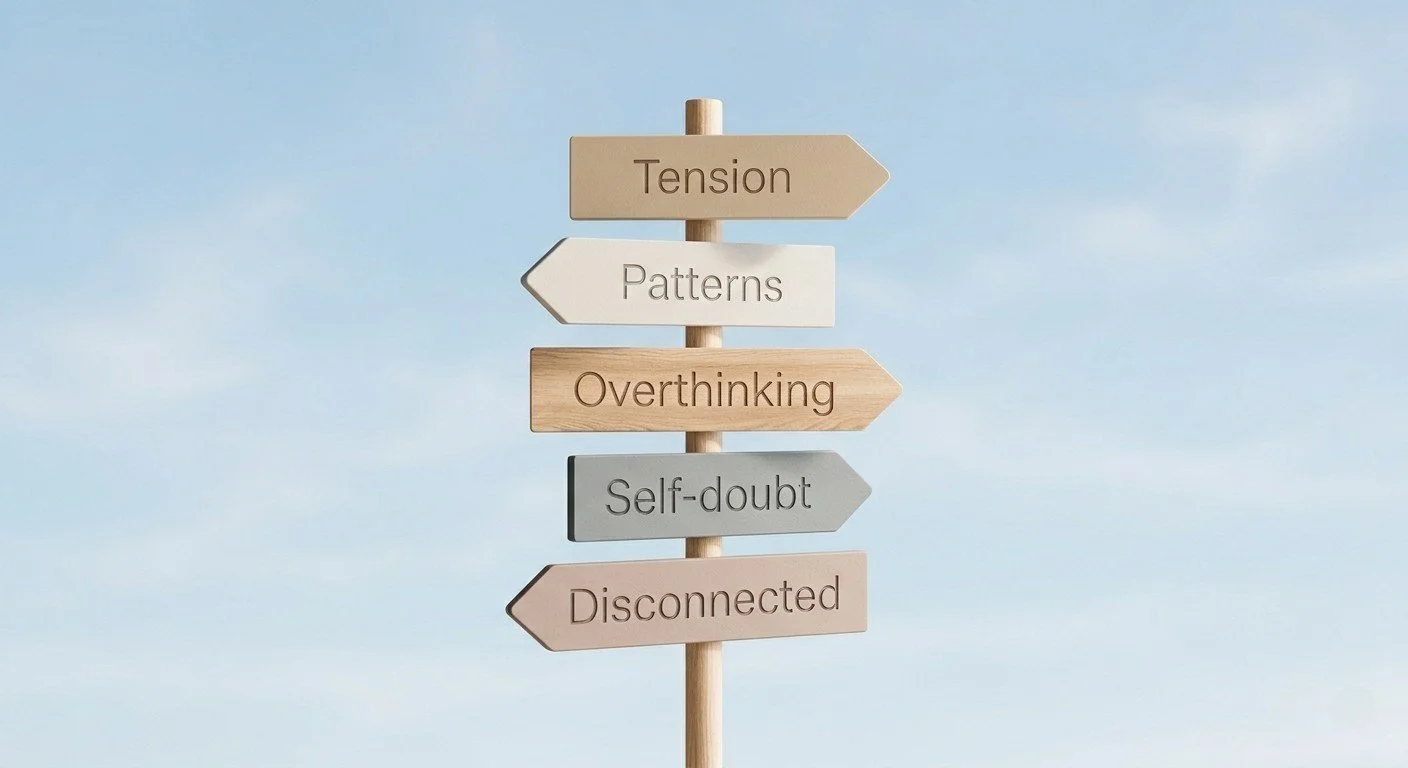
People don't usually search for trauma symptoms because they suspect they have PTSD. They search because something isn't working and they can't fully account for why. Relationships that keep ending the same way. Reactions that feel too large for the situation. A persistent sense of being fundamentally flawed that logic hasn't shifted. Physical tension that never fully releases. The search usually starts not with a diagnosis in mind but with a question: why do I keep responding this way?
Unresolved trauma doesn't always look like what people expect. Many people carrying its effects don't recognise it as trauma at all, because their symptoms don't include flashbacks and nothing in their history feels dramatic enough to qualify. In clinical terms, trauma can refer to experiences that overwhelm a person's ability to cope or integrate what happened, leaving lasting emotional, physical, or psychological effects. For Albertans trying to make sense of patterns that have persisted across years or decades, understanding the range of ways unresolved trauma presents is often the starting point for getting clearer on what's actually happening.
If this article is helping you recognise patterns in your own experience, our article on EMDR therapy for PTSD and complex trauma explains how trauma-focused therapy works in more detail.
Table of Contents
- Why Unresolved Trauma Doesn't Always Look Like Trauma
- Why People Often Don't Realise Trauma is Affecting Them
- Experiences Don't Have to Be Extreme to Have Lasting Effects
- Emotional Signs of Unresolved Trauma
- Physical Signs of Unresolved Trauma
- Relational Signs of Unresolved Trauma
- Cognitive Signs and How Trauma Shapes Self-Perception
- Behavioural Signs of Unresolved Trauma
- When These Signs Point Toward Something Worth Addressing
- Understanding Patterns with Professional Support
- Frequently Asked Questions About Signs of Unresolved Trauma
Why Unresolved Trauma Doesn't Always Look Like Trauma
Unresolved trauma frequently presents without the symptoms most people associate with it. Many people who experienced difficult childhoods, chronic relational harm, or prolonged stress don't connect their current functioning to those experiences because the effects developed gradually, feel like personality rather than symptoms, or don't fit the standard picture of PTSD.
The clinical reality is that trauma isn't defined by the severity of an event but by whether the body was able to process and integrate the experience at the time. When it couldn't, automatic protective responses that were once necessary continue operating long after the original circumstances have passed. Those responses produce effects across multiple areas of functioning, often without any conscious connection to the original experience.
Why People Often Don't Realise Trauma is Affecting Them
Experiences that occur early or repeatedly tend to be normalised. When a household was emotionally unpredictable, when criticism was constant, or when relationships involved chronic uncertainty, those conditions become the baseline. The child doesn't register them as abnormal because they've never experienced anything different. The adult they become often carries the same frame of reference.
Why High-Functioning Trauma Often Goes Unrecognised
Functioning well on the outside is one of the more reliable reasons people don't connect their experience to trauma. When someone has built effective coping strategies, a demanding career, a controlled environment, a pattern of keeping busy, the underlying distress isn't always visible, including to themselves. The strategies work until they stop working, or until the cost of maintaining them becomes impossible to ignore.
The One-Event Assumption
Many people also assume trauma requires a single identifiable dramatic event. Because their experience was gradual, relational, or didn't involve obvious violence or abuse, they conclude it doesn't qualify. This assumption is one of the most common reasons people spend years managing symptoms without identifying their source.
Experiences Don't Have to Be Extreme to Have Lasting Effects
Trauma is about impact, not comparison. Two people can go through comparable circumstances and carry very different outcomes depending on their age at the time, the support available to them, prior experiences, and individual factors that aren't fully understood. Neither experience is more or less valid based on how it compares to someone else's.
What research on adverse childhood experiences consistently shows is that chronic stress and adversity, including emotional neglect, household instability, and persistent unpredictability, can produce lasting effects on physical and emotional functioning even without discrete traumatic events. The CDC and Kaiser Permanente's large-scale research found a dose-response relationship between cumulative adverse experiences and health outcomes across adulthood, meaning effects tend to compound rather than require a single threshold to be crossed.
Not all difficult experiences produce lasting trauma effects. Assessment with a trained clinician clarifies what's actually happening rather than confirming or denying a label. The purpose of recognising these signs is not self-diagnosis; it's deciding whether a clinical conversation is worth having.
Emotional Signs of Unresolved Trauma
Reactions That Feel Disproportionate
An emotional response arrives that's clearly larger than the present situation warrants. The reaction feels familiar, as if it belongs to a pattern that has appeared across different situations and different relationships over many years. The body's threat detection system is responding to a perceived pattern rather than the present moment, drawing on something stored rather than something current.
The distinguishing marker, which separates this from general anxiety, is that the reaction feels older than the situation. Clients often describe a quality of recognition: "I know this feeling. I've been here before." That sense of familiarity is clinically significant.
Chronic Shame and Self-Criticism
Persistent negative self-perception that doesn't shift with evidence, logic, or achievement. Intellectually knowing a belief about yourself is inaccurate while feeling it to be true at a level that reasoning can't reach. This is clinically different from ordinary self-doubt; it's pervasive, global, and often felt physically as a settled heaviness rather than a fleeting thought.
These beliefs often don't shift through logic alone because they are tied to repeated lived experience, not just conscious thought. That's part of why insight and reassurance frequently leave them unchanged.
Emotional Numbness or Disconnection
Difficulty accessing feelings, going through the motions of daily life without feeling fully present, or a persistent sense of watching from a slight distance. Emotional disconnection can function as a protective response when emotions once felt unsafe or overwhelming. It isn't indifference or apathy; it's a learned adaptation that persists beyond the circumstances that produced it.
Difficulty Tolerating Specific Emotions
Certain emotions, often anger, grief, vulnerability, or fear, feeling unsafe or overwhelming rather than simply uncomfortable. Avoidance of those emotional states so automatic it doesn't register as avoidance. A pattern of managing internal experience by keeping certain feelings at a distance, often without being fully aware that's what's happening.
Physical Signs of Unresolved Trauma
Chronic Physical Symptoms Without Clear Medical Cause
Persistent headaches, digestive problems, chronic fatigue, muscle tension, or pain that doesn't have a clear medical explanation. Research consistently shows that long-term stress exposure and adverse experiences can affect physical functioning through changes in how the body's stress response systems operate over time. Physical symptoms can persist when the effects of past stress have not been fully processed, and they are frequently among the earliest and most consistent signs that something needs attention.
Persistent Physical Tension and Hypervigilance
A constant low-level physical readiness: scanning environments, a heightened startle response, difficulty fully relaxing even in objectively safe situations. The body maintaining a defensive posture that was once necessary. This is specifically different from general anxiety in one important way: it has been present for so long it feels like the baseline, not a response to current circumstances. Many people describe it as simply how they are, without recognising it as a learned protective state rather than a fixed trait.
Sleep Disturbances
Difficulty falling asleep, staying asleep, or dreams that aren't obviously connected to recognisable trauma content but leave a residue of unease. The body not completing the transition to full safety at night, remaining on a low level of alert even in rest.
Relational Signs of Unresolved Trauma
Difficulty Trusting Others
Chronic wariness in relationships even with people who have demonstrated consistent trustworthiness over time. A persistent background sense of waiting for things to go wrong. This isn't a personality trait or a reflection of the people someone has chosen to be around; it's a learned response shaped in a relational environment that wasn't safe, persisting into contexts that are.
Patterns That Keep Repeating in Relationships
Finding oneself in similar relational dynamics across different people and different circumstances. The same roles, the same endings, the same emotional quality to conflicts that seem on the surface to involve entirely different situations. Early relational experience establishes a working model for what relationships feel like and what to expect from people. People-pleasing, difficulty asserting needs, chronic self-erasure, and habitual conflict avoidance are common expressions of this pattern.
Difficulty With Closeness or Fear of Abandonment
Either a persistent difficulty tolerating genuine intimacy or a chronic anxiety about being left that doesn't match the actual security of current relationships. Both reflect disruptions in how attachment developed, not the quality of present relationships. The intensity of the response often feels confusing because it doesn't seem proportionate to what's happening now.
Cognitive Signs and How Trauma Shapes Self-Perception
Persistent Negative Beliefs About Yourself
Beliefs that function as facts: "I am not enough," "I am a burden," "I don't deserve good things," "Something is wrong with me." These beliefs often arrived early, feel settled rather than fluctuating, and remain largely unmoved by contradicting evidence. They aren't being maintained by a reasoning process; they're being maintained by the experiences that established them.
Difficulty Staying Present
Chronic rumination about the past or persistent preoccupation with future threat. A quality of not quite landing in the present moment, of life happening slightly at a remove. This is distinct from ordinary worry in that it's longstanding, feels like the default mode rather than a response to current stressors, and carries a familiar quality that feels almost habitual in its unease.
All-or-Nothing Thinking
Situations and people assessed in extreme terms, without much room for nuance or complexity. When the body's stress response system is maintaining a chronic state of alert, the cognitive flexibility required for nuanced thinking becomes harder to access. Things are safe or threatening, people are trustworthy or dangerous, situations are fine or catastrophic. The middle ground that most people occupy most of the time feels less available.
Behavioural Signs of Unresolved Trauma
Avoidance That Feels Like Preference
Life gradually organised around not encountering specific situations, conversations, or reminders, without the person necessarily registering it as avoidance. Not the obvious kind, like refusing to drive after an accident, but the accumulated narrowing that happens slowly across years: topics that are never discussed, situations that are always sidestepped, a life that has quietly contracted around a set of things that feel too activating to approach.
Numbing Behaviours
Using substances, overworking, excessive screen time, food, or other behaviours to manage internal states. These are functional adaptations to unprocessed distress, not moral failures. They work, to a degree, at managing the discomfort that would otherwise be present. Understanding them as adaptations rather than character flaws changes what kind of help is relevant.
Perfectionism and Over-Control
Perfectionism rooted not in ambition but in early experience of conditional approval, unpredictable consequences, or environments where things frequently went wrong. Control as a learned survival response to a world that felt unsafe. Distinct from healthy high standards in a specific way: it's exhausting, relentless, and never quite enough. The difference is not the presence of goals, but the sense that mistakes feel unsafe rather than simply disappointing. Reaching the standard doesn't produce satisfaction; it produces a brief pause before the next threshold appears.
When These Signs Point Toward Something Worth Addressing
Isolated signs across any one category are less clinically significant than a pattern across multiple domains. When emotional, physical, relational, and behavioural signs are present simultaneously and have been present for years, that's a more meaningful clinical picture than any single symptom in isolation.
Duration matters more than intensity. Signs that have been present since early adulthood or childhood, that feel like the fabric of how a person functions rather than a response to recent events, are worth taking seriously regardless of how well the person has learned to manage around them.
Many people live with these patterns for years without realising they are changeable. Without treatment or other meaningful change, these patterns often persist for years and can continue across different life circumstances. When they're affecting daily functioning, relationships, or quality of life in ways the person would change if they could, that's a reasonable threshold for a clinical conversation.
Is EMDR right for you covers the assessment and readiness picture for anyone reaching that threshold and wondering where to start.
Understanding Patterns with Professional Support
Recognising these signs in yourself is not the same as understanding what they mean clinically or what would be most helpful. A symptom list is a starting point for a conversation, not a diagnosis. A clinical assessment looks at the full picture, including your history, patterns over time, current concerns, and the impact on daily functioning. This helps determine whether past experiences may be contributing to present difficulties and what type of support may be appropriate.
At The Mental Health Clinic, our therapists work with adults across Alberta using evidence-based approaches relevant to trauma-related concerns, including the revered EMDR therapy, approach delivered through secure virtual sessions. Whether you are in Calgary, Red Deer, Lethbridge, Edmonton, or a smaller community where access to trauma-informed clinicians may be limited, a free 20-minute consultation is available to discuss what you are noticing and whether therapy may be a helpful next step.
Frequently Asked Questions About Signs of Unresolved Trauma
Can unresolved trauma affect how safe the world feels even when life is stable?
Yes. Some people notice a persistent sense of tension, unease, or difficulty fully relaxing even when their current environment is stable. This can occur when the body has learned to remain alert due to earlier experiences. Over time, this heightened awareness can feel normal, even though it reflects a protective state that is no longer necessary in the present.
Why do some patterns feel difficult to change even when I understand them?
Insight does not always change learned protective responses. When patterns developed in response to earlier experiences, they may continue automatically even when a person logically understands what is happening. This can make reactions feel frustrating or confusing, especially when someone is actively trying to respond differently but still feels pulled toward familiar emotional or behavioural patterns.
Can unresolved trauma influence decision-making or life choices?
It can. Some people notice patterns such as avoiding certain opportunities, staying in situations that feel familiar but unfulfilling, or feeling drawn toward environments that recreate earlier relational dynamics. These patterns are usually not intentional and often reflect learned expectations about safety, connection, or self-worth.
Why do certain situations or interactions create strong emotional discomfort without a clear reason?
Sometimes present-day situations resemble earlier experiences in subtle ways. Tone of voice, conflict, feeling criticised, or feeling ignored can activate emotional responses that feel disproportionate to what is currently happening. These reactions are often connected to patterns learned earlier in life rather than the present situation alone.
When do these patterns indicate that professional support may be helpful?
Support may be helpful when patterns feel persistent, confusing, or difficult to change despite effort. Many people seek therapy when emotional reactions, relationship difficulties, or internal distress continue affecting quality of life even when circumstances improve. A clinical conversation can help clarify whether these patterns relate to unresolved experiences and what type of support may be appropriate.
Is it possible to experience the effects of trauma without thinking about the past very often?
Yes. Some people rarely think about earlier experiences yet still notice patterns in emotional responses, relationships, or stress tolerance. Trauma does not always appear as intrusive memories. In many cases, it shows up indirectly through reactions, beliefs, or behaviours that developed over time.
Educational Disclaimer
This article is for educational purposes only and is not a substitute for professional medical advice, diagnosis, or treatment. If you're experiencing mental health concerns that interfere with your daily functioning, please reach out to a qualified mental health professional. If you're in crisis, contact your local crisis line or emergency services immediately.
