
Social Anxiety: When Fear of Judgment Affects Daily Life

Photo by Vitaly Gariev
“Why did I say that?”
“I should have just stayed quiet.”
“They probably think I’m awkward.”
If thoughts like these show up after conversations, meetings, or even quick interactions, you’re not alone. For many people, worrying about how they came across is constant. It happens at work, at school, while running errands, or talking to people they already know.
This fear of being judged can change how you act throughout the day. Social anxiety refers to a pattern of fear, self-consciousness, or discomfort in situations where a person feels observed, evaluated, or judged by others. You might stay quiet even when you have something to add, avoid situations where attention might land on you, or replay interactions long after they end. Over time, it can feel exhausting just to get through normal social moments. Many people who seek counselling across Alberta describe this same fear of judgment showing up in work, school, relationship, and everyday social situations.
This article explains what social anxiety is, how fear of judgment affects daily life, and what can help reduce its hold.
Table of Contents
- What Is Social Anxiety
- Where Social Anxiety Shows Up in Everyday Life
- How Fear of Judgment Changes Behaviour Over Time
- What Social Anxiety Feels Like Before, During, and After Social Situations
- Why Fear of Judgment Can Feel So Intense
- The Social Anxiety Cycle
- What Helps Reduce Social Anxiety in Daily Life
- How Therapy Can Help with Social Anxiety
- When It Might Be Time to Get Support
- Frequently Asked Questions About Social Anxiety
- Moving Forward with Social Anxiety
What Is Social Anxiety
Social anxiety is usually driven by fear of judgment, embarrassment, or negative evaluation rather than fear of people themselves.
Social anxiety shows up when you think others might judge you. It can happen during meetings, conversations, or brief interactions where you feel noticed. The concern is usually about how you came across, not about the situation itself.
Social anxiety affects everyday interactions, not just social events
Social anxiety can show up at work, at school, or while running errands. You might worry about how you sound on the phone, what people think of your response, or whether you said too much. Even familiar situations can trigger the same tension.
Social anxiety is different from shyness or introversion
Shy people often relax once an interaction gets going. Introverted people may prefer less social time but still feel at ease when they participate. Social anxiety involves ongoing fear or discomfort, even when you want to connect or have done the situation many times before.
Social anxiety often continues after interactions end
A conversation can go fine, yet you may replay it later. You might question your tone, your words, or how others reacted. The worry comes from imagined judgment rather than clear feedback.
Where Social Anxiety Shows Up in Everyday Life
Social anxiety is not limited to parties or public speaking. It often shows up in routine situations where other people are present and attention feels possible.
Social anxiety at work and school
You might hesitate to speak during meetings, even when you have an idea. You may worry about how your voice sounds, whether your question makes sense, or if others will think you are wasting time. Group discussions, presentations, or being called on unexpectedly can feel especially stressful.
Some people avoid taking on visible roles or opportunities because they do not want to be watched or evaluated. Others push through but feel tense the entire time.
Social anxiety during everyday conversations
Small talk can feel uncomfortable when you are unsure what to say next. You might worry about awkward pauses, saying the wrong thing, or running out of things to talk about. Conversations that seem easy for others can feel effortful and draining.
Even talking with people you know well can bring up the same concerns, especially in group settings.
Social anxiety during routine daily tasks
Social anxiety often shows up during errands or brief interactions. Ordering food, making a phone call, checking out at a store, or asking for help can cause tension. You might rehearse what to say ahead of time or avoid the interaction altogether if possible.
These changes can make social situations feel safer in the moment, but they often limit participation and connection.
Social anxiety in online and digital communication
Social anxiety can also show up in online and digital communication. You might reread messages before sending them, worry about how your tone comes across, or wait anxiously for a response. Afterward, you may question whether you said too much or not enough.
Group chats, emails, and social media can bring the same fear of judgment, even without face-to-face contact.
How Fear of Judgment Changes Behaviour Over Time
When you worry about being judged often, it does more than make social situations uncomfortable. It starts to shape how you act before, during, and after interactions.
Self-monitoring during social interactions
During conversations, your attention may turn inward. You might track how you sound, where your hands are, or whether you are making eye contact. While doing this, it becomes harder to follow what others are saying.
This can lead to delayed responses, missed cues, or moments where your mind goes blank, which then adds to the fear that you are coming across poorly.
Avoiding attention to reduce fear of judgment
To reduce the risk of judgment, many people adjust how they act. You might stay quiet, keep answers short, or agree with others even when you have a different opinion. Some people avoid sitting where they can be seen or choose roles that keep them in the background.
These changes can make social situations feel safer in the moment, but they often limit participation and connection.
Over-preparing for everyday social situations
Fear of judgment can lead to over-preparing. You may rehearse what to say before meetings, plan conversation topics ahead of time, or reread messages multiple times before sending them.
Preparation can feel helpful, but it can also increase pressure and make interactions feel more like performances than conversations.
Avoiding social situations that feel high-risk
Over time, avoidance can grow. You might turn down invitations, delay phone calls, or skip events where attention might land on you. Some situations are avoided entirely, while others are endured with significant stress.
Avoidance can reduce anxiety short-term, but it often makes fear stronger the next time a similar situation comes up.
These patterns do not describe everyone with social anxiety, and they are not an exhaustive list. They are some of the most common ways fear of judgment shows up across different people and situations.
What Social Anxiety Feels Like Before, During, and After Social Situations
Social anxiety often follows a predictable rhythm. The stress does not start and end with the interaction itself. It builds beforehand, peaks during the moment, and lingers afterward.
How social anxiety feels before social situations
Before a social situation, you might feel tense without a clear reason. You may think through what you will say, how you should act, or how long you can stay. Some people check details repeatedly, plan exit strategies, or debate whether they can cancel.
Even situations you have handled many times can trigger this build-up. The body reacts as if something risky is coming, even when the task is familiar.
How social anxiety feels during social interactions
During the interaction, your focus may narrow. You might notice your heart rate, your breathing, or whether your face feels warm. Your mind may jump ahead to how you are being perceived instead of staying with the conversation.
Some people feel their mind go blank. Others talk more than they planned or struggle to jump into the conversation at all. It can feel hard to respond naturally when part of your attention is spent checking yourself.
How social anxiety feels after social interactions
Once the interaction ends, the tension does not always stop. You may replay what you said, how others reacted, or moments that felt off. Neutral interactions can still turn into hours of second-guessing.
This review can feel automatic and hard to interrupt. It often leads to self-criticism and the sense that you should have handled things differently, even when there was no clear problem.
Why Fear of Judgment Can Feel So Intense
For many people, social anxiety does not come from nowhere. The fear often makes sense when you look at past experiences, expectations, and how the body reacts in social situations.
Past experiences that increase fear of judgment
Some people trace their fear back to moments where they were embarrassed, criticized, or singled out. This might include being laughed at, corrected in front of others, bullied, or frequently told they were doing things wrong.
Even if these experiences happened years ago, the body can still react as if they might happen again. Similar situations can trigger the same fear, even when the current setting is different.
Learning that attention leads to negative outcomes
Over time, some people learn that being noticed leads to discomfort. Attention may have meant criticism, rejection, or pressure to perform. As a result, situations where others are watching or listening closely can feel risky.
This can make neutral situations feel loaded. Speaking up, being asked a question, or drawing attention can trigger fear, even when no one is actually judging.
High self-expectations and fear of social mistakes
Many people with social anxiety hold themselves to strict standards. They may expect to speak clearly, respond quickly, and avoid mistakes at all costs. When they fall short of these expectations, even in small ways, it can feel unacceptable.
This pressure increases fear during interactions and fuels self-criticism afterward.
How the nervous system reacts in social situations
Social anxiety also involves the body. The nervous system can treat social situations as threats, triggering physical reactions like a racing heart, shallow breathing, or muscle tension.
These reactions are automatic. They are not a sign of weakness or lack of confidence. You can also explore our articles on anxiety and emotion regulation for more support in understanding how the mind and body respond to stress. They are the body trying to protect against perceived risk.
The Social Anxiety Cycle
Social anxiety often follows a repeating pattern. Each part makes sense on its own, but together they can keep fear of judgment in place.
Anticipation before social situations
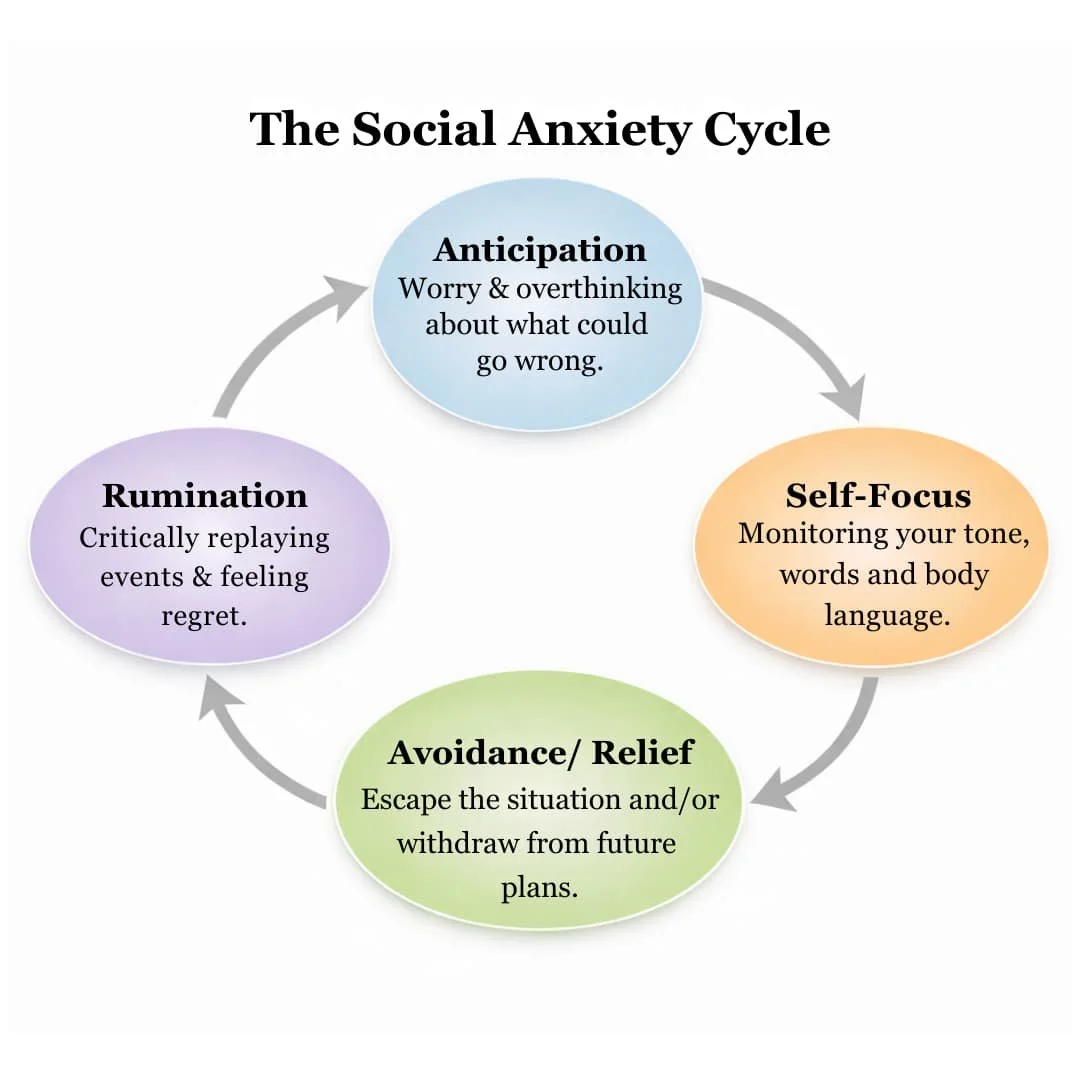
Before an interaction, your mind may jump ahead. You might think about what could go wrong, how you should act, or whether you should avoid the situation altogether. Even simple plans can come with a sense of pressure. This anticipation can make the situation feel more difficult before it even starts.
Heightened self-focus during social interactions
During the interaction, attention often turns inward. You may monitor your words, your tone, or your body language. At the same time, you may worry about how others are reacting. Because so much focus is on yourself, it can be harder to stay engaged in the conversation. This can increase the feeling that you are not doing well socially.
Avoidance and relief after social situations
Afterward, you may feel relief that the situation is over. You might leave early, cancel future plans, or decide to avoid similar situations next time. Avoidance can feel like a solution because it reduces anxiety in the short term. However, avoiding situations also prevents you from learning that you can cope, even when things feel uncomfortable.
Rumination and self-criticism after social interactions
Once the situation ends, many people replay it in their mind. You may focus on small details, wonder what others thought, or criticize yourself for how you acted. This rumination can last much longer than the interaction itself. It often feeds back into anticipation the next time a similar situation comes up.
What Helps Reduce Social Anxiety in Daily Life
Reducing social anxiety is not about eliminating fear altogether. For most people, it is about changing how they respond to fear and how much control it has over their choices.
1. Setting realistic expectations for social performance
Many people with social anxiety expect themselves to speak smoothly, respond quickly, and avoid mistakes. Adjusting these expectations can help.
Conversations include pauses, missteps, and awkward moments for everyone. Allowing interactions to be imperfect can reduce the urge to analyse them afterward.
2. Shifting attention outward during interactions
Social anxiety pulls attention inward. One helpful change is practicing placing more attention on the other person or the task at hand.
This might mean listening closely to what is being said, noticing details in the room, or focusing on the purpose of the interaction. Even small shifts outward can reduce self-monitoring and ease pressure.
3. Reducing safety behaviours that increase pressure
Safety behaviours are things people do to prevent embarrassment. These can include rehearsing what to say, overexplaining, avoiding eye contact, or staying quiet.
While these behaviours feel protective, they often keep anxiety going. Gradually reducing them can make interactions feel more natural and less tense over time.
4. Letting discomfort be present without trying to hide it
Many people with social anxiety put a lot of effort into hiding nervousness. They may try to control their voice, their hands, or their facial expression.
Letting go of some of that effort can help. This might look like allowing a pause in conversation, accepting a shaky voice, or not correcting yourself right away. When you stop trying to appear calm, interactions often feel less exhausting.
5. Taking small social risks instead of avoiding everything
Avoidance can feel relieving in the moment, but it often makes fear stronger over time. What helps more is taking small, manageable risks that fit into daily life.
This might mean:
Asking one question in a meeting
Making a short phone call instead of emailing
Staying a few minutes longer before leaving an event
These steps are not about forcing confidence. They are about learning that discomfort can rise and fall without something going wrong.
How Therapy Can Help with Social Anxiety
Therapy for social anxiety focuses on reducing fear of judgment and making everyday interactions easier to manage. It is not about changing who you are or forcing confidence.
Different approaches help in different ways, and many therapists combine them based on what fits best. Many people find that working with a therapist for social anxiety helps them reduce avoidance, understand fear patterns, and feel more steady in everyday situations.
CBT (Cognitive Behavioural Therapy) Helps identify patterns like assuming others are judging you or avoiding situations. Therapy focuses on changing how you respond, even when anxiety is present.
ACT (Acceptance and Commitment Therapy) Helps you take action without waiting for anxiety to disappear. You learn how to speak, participate, or connect while discomfort is still there.
DBT (Dialectical Behaviour Therapy) Offers practical skills to calm the body, manage intense reactions, and reduce the urge to escape social situations.
EFT (Emotionally Focused Therapy) Explores fear of rejection or disapproval in relationships and helps build a stronger sense of safety with others.
EMDR Helps when social anxiety is linked to specific past experiences, such as bullying or public embarrassment, that still feel triggering.
IFS (Internal Family Systems) Helps you understand different internal responses, such as the part that wants connection and the part that fears judgment or criticizes.
Narrative and Solution-Focused Therapy Focuses on strengths, past successes, and realistic next steps, rather than defining yourself by anxiety.
When It Might Be Time to Get Support
Many people live with social anxiety for a long time without asking for help. They manage by avoiding certain situations, pushing through discomfort, or telling themselves it is just how they are. Sometimes, though, the effort it takes starts to outweigh what feels manageable.
It might be time to seek support if:
You regularly avoid meetings, classes, calls, or social situations that matter to you
Fear of judgment affects your work, school performance, or relationships
You spend hours replaying interactions or criticizing yourself afterward
Social situations leave you feeling drained for the rest of the day
You rely on alcohol, substances, or withdrawal to get through social events
You feel stuck in the same patterns, even though you want things to change
Seeking support does not mean you have failed at coping on your own. It means the strategies you have been using are no longer enough on their own.
Therapy can offer a place to understand what is driving the fear, practice new responses, and reduce how much social anxiety controls your daily choices.
Frequently Asked Questions About Social Anxiety
Does social anxiety ever go away on its own?
For some people, social anxiety becomes less intense over time, especially if they have repeated safe social experiences. For others, fear of judgment stays the same or becomes more limiting when avoidance increases. Support, practice, and skill-building often make a meaningful difference. What matters most is whether social anxiety is interfering with daily life or keeping you stuck.
Is social anxiety the same as an anxiety disorder?
Social anxiety can exist on a spectrum. Some people experience it as a recurring pattern of fear and self-consciousness in social situations, while others meet criteria for social anxiety disorder. The difference usually depends on how often it happens, how intense it feels, and how much it affects daily functioning. A mental health professional can help clarify what fits your situation.
Can teens have social anxiety?
Yes. Social anxiety often becomes more noticeable during adolescence, especially in school, friendship, and peer group settings where judgment feels more visible. Teens may avoid speaking in class, social events, or situations where attention could land on them. Support can help reduce avoidance and build confidence before patterns become more entrenched.
Is medication the only option for social anxiety?
No. Medication can help some people, but it is not the only option. Many people benefit from therapy, practical coping strategies, and gradual work on reducing avoidance. Some use therapy alone, while others use it alongside medication. A healthcare provider can help you explore what fits best for your needs.
Can social anxiety get worse over time if it is not addressed?
It can. For some people, avoiding social situations brings short-term relief but gradually strengthens the fear over time. As avoidance expands, confidence and flexibility often decrease, making more situations feel difficult or high-risk. Addressing these patterns earlier can help prevent social anxiety from becoming more limiting.
Is it possible to have social anxiety and still want connection?
Yes. Many people with social anxiety want closeness, friendship, and meaningful connection. The difficulty usually comes from fear of judgment, embarrassment, or getting something wrong, not from a lack of interest in people. This is one reason social anxiety can feel so painful. The desire for connection is still there, even when fear makes reaching for it harder.
Moving Forward with Social Anxiety
Living with social anxiety can be exhausting. When fear of judgment shows up in everyday moments, it can affect how you speak, where you go, and how much energy social situations take. This does not mean there is something wrong with you. It reflects a nervous system that learned to stay alert to how others might respond.
Social anxiety does not define your ability or your worth. With the right support and strategies, it is possible to reduce how much fear of judgment shapes daily life.
Counselling can help you understand what keeps the fear going and practice new ways of responding. Support is not about forcing confidence or changing who you are. It is about feeling more steady in situations that matter.
Phone and online counselling are available across Alberta for teens, adults, couples, and families who want support with anxiety, relationships, and everyday functioning. Reaching out for support is not a failure. It is a practical step toward feeling more at ease, at your own pace.
Educational Disclaimer
This article is for educational purposes only and does not replace assessment, diagnosis, or treatment by a qualified professional. If you’re struggling to function or you feel unsafe, seek professional support.
