
When Depression Starts Affecting Daily Functioning

Table of Contents
- When Depression Starts Affecting Daily Functioning
- What Daily Functioning Means When You’re Depressed
- Common Ways Depression Interferes with Everyday Life
- High-Functioning Depression and Invisible Strain
- Why Depression Affects Daily Functioning the Way it Does
- When Functional Impact Becomes a Signal to Seek Support
- A Brief Check-In on Daily Functioning
- How Therapy Helps Improve Daily Functioning
- What Improvement in Depression Looks Like
- Depression and Daily Functioning: Frequently Asked Questions
- Noticing Change Without Forcing a Conclusion
When Depression Starts Affecting Daily Functioning
For many people, depression does not arrive as a clear emotional collapse. It begins as a subtle change in how daily life feels to move through.
You may still be getting up, going to work, answering messages, and meeting expectations. On the outside, nothing looks dramatically different. Internally, everything begins to require more effort. Getting started feels harder. Finishing tasks takes longer. The day feels heavier, even when nothing specific has gone wrong.
When Everyday Tasks Start Taking More Effort
This is often where people get stuck. They notice the strain, but they do not recognize it as something meaningful. They tell themselves they are just tired, unmotivated, or falling behind. They push harder, tighten their expectations, and keep going.
What shifts is not mood alone. It is capacity. Depression often affects daily functioning by reducing mental energy, motivation, concentration, and emotional availability.
The same responsibilities that once felt manageable now drain energy faster. Small decisions feel oddly taxing. There is less room for interruption, error, or emotional demand. By the end of the day, there is very little left.
How People Compensate When Depression Affects Functioning
This change tends to happen gradually. Because there is no clear breaking point, people often adapt without noticing how much they are compensating.
By the time daily functioning is clearly affected, many have been carrying the load for much longer than they realize. Depression often shows up this way, not as an emotional crisis, but as a steady narrowing of what feels doable. Many clients in Alberta describe noticing these changes only after daily life has already become harder to manage.
What Daily Functioning Means When You’re Depressed
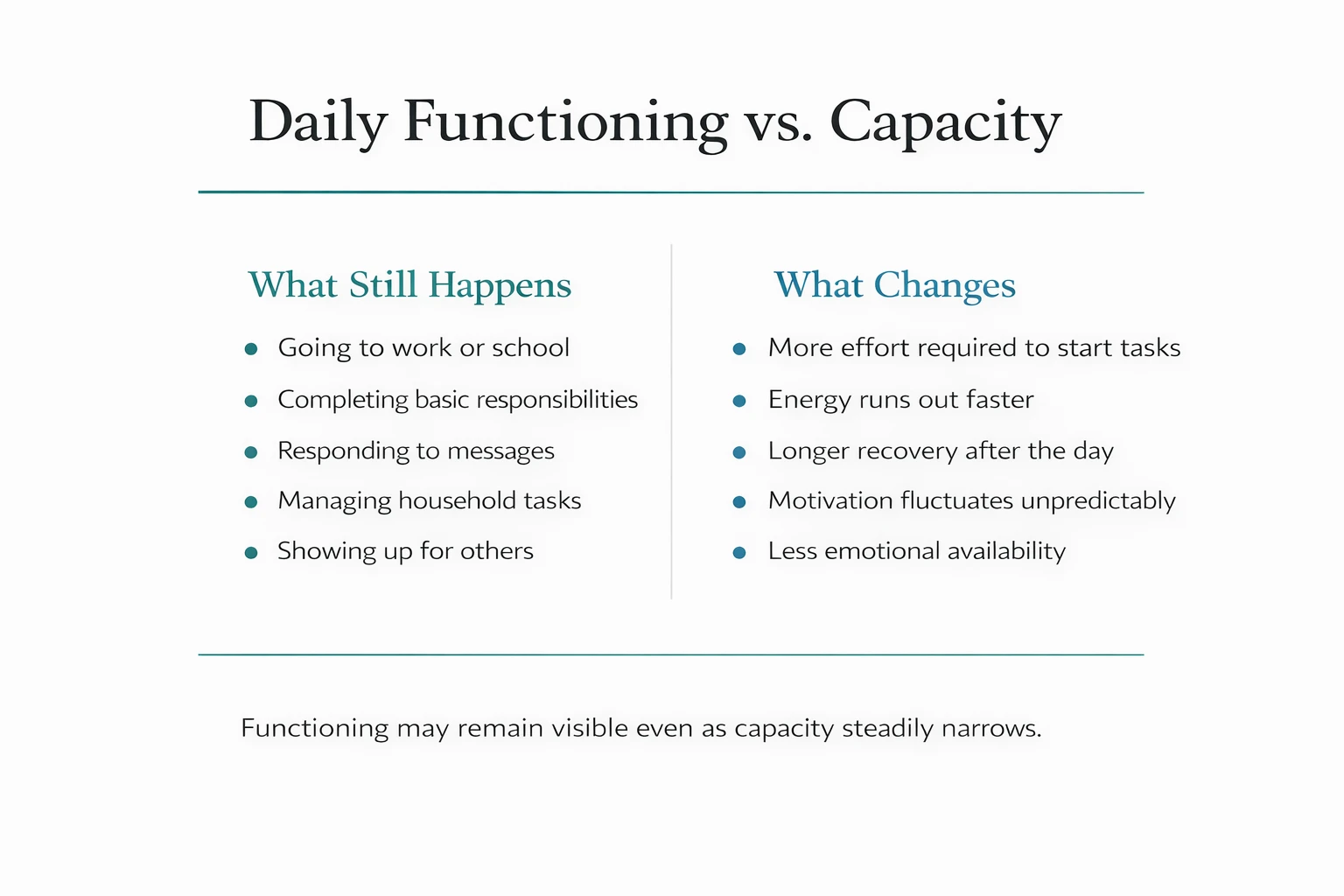
Daily Functioning Is About Capacity, Not Productivity
In sessions, people rarely say, “I’m not functioning.” What they describe instead is how much effort everything takes.
They talk about forcing themselves through the day. About needing long breaks between simple tasks. About getting one thing done and feeling like they have already used up what little energy they had.
Nothing dramatic has changed. They are still showing up. But the cost of showing up is much higher than it used to be.
How Depression Affects Energy, Motivation, and Follow-Through
When depression starts affecting daily functioning, energy becomes unpredictable. Not the kind of tiredness that improves with sleep, but a flat, heavy depletion that sits underneath the day.
Motivation comes and goes without warning. A task might feel possible in the morning and completely unreachable by the afternoon. People often describe knowing exactly what they need to do and feeling unable to start, even when the consequences matter.
Follow-through becomes fragile. Things get postponed, half-finished, or avoided altogether, not because of laziness, but because the internal push required feels out of reach.
How Depression Interferes with Work and Daily Responsibilities
This shift often shows up first in roles that require consistency. Work tasks pile up more quickly. Emails sit unanswered longer. Deadlines are met, but only under pressure, and with far more strain than before.
At home, everyday responsibilities feel heavier. Laundry, meals, errands, and paperwork take on an outsized weight. People may find themselves doing the bare minimum to keep things from falling apart. From the outside, it can still look like they are managing. Internally, it feels like holding everything together with very little margin.
How Depression Affects Emotional Availability in Relationships
Functioning also includes how emotionally present someone can be. Depression often narrows that capacity.
Conversation can feel effortful. Listening takes more concentration. Responding with patience or warmth feels harder to access. Some people withdraw to conserve energy. Others stay engaged but feel flat, distant, or easily irritated.
These changes are rarely intentional. They reflect a nervous system under strain, trying to get through the day with limited reserves.
Common Ways Depression Interferes with Everyday Life
Difficulty Starting and Finishing Tasks
One of the most frustrating changes people describe is how hard it becomes to begin. Tasks are not confusing. They are familiar. The steps are known. But there is a pause that stretches longer than it used to.
People sit down to start something and feel stuck. They scroll. They reorganize. They wait for the right moment. When they do manage to begin, staying with the task can feel just as hard. Attention slips. Energy drops. Finishing feels out of reach.
Over time, this pattern can quietly reshape the day around avoidance and last-minute pressure.
Reduced Concentration and Mental Stamina
Depression often shortens how long the mind can stay engaged. Reading takes longer. Conversations are harder to follow. Instructions need to be reread.
Many people notice they can focus for brief periods, then feel mentally spent. Pushing past that point tends to increase mistakes and frustration. This can be especially discouraging for people who previously relied on their focus or efficiency.
The mental fatigue is real, even when it is not visible. If you're exploring depression further, you can also read our articles on how depression develops and how it begins affecting daily life.
Emotional Withdrawal, Irritability, or Numbness
As energy narrows, emotional range often narrows with it. Some people feel flat or disconnected. Others feel more irritable than usual, reacting sharply to things that would not have bothered them before.
Withdrawing can become a way of conserving what little capacity remains. Fewer conversations. Fewer plans. Less engagement. Not because connection is unwanted, but because it feels costly.
This shift can be confusing for both the person experiencing it and the people around them.
The Hidden Effort of Appearing “Okay”
Many people continue to function by masking how much they are struggling. They show up on time. They respond appropriately. They meet expectations.
What is not seen is the effort required to do so. The internal self-talk. The emotional suppression. The recovery time needed afterward.
Maintaining this appearance can take up a significant amount of energy. Over time, it leaves very little left for rest, enjoyment, or connection.
High-Functioning Depression and Invisible Strain
When You’re Still Functioning but Struggling Inside
Some people hesitate to consider depression because their life looks intact. They are still working. Still parenting. Still managing responsibilities. From the outside, nothing appears to be falling apart.
In sessions, this often shows up as confusion. People say they do not understand why things feel so hard when they are technically keeping up. They point to what they are accomplishing as evidence that they should be fine.
What gets missed is the internal cost of maintaining that level of functioning.
The Invisible Effort Behind High-Functioning Depression
High-functioning depression often involves a constant calculation of energy. People decide what they can afford to do and what they cannot, even if they do not realize they are doing it.
They may push through work and cancel everything else. They may show up socially and need long periods of isolation afterward. They often plan their days carefully to avoid overload, frustration, or emotional exposure.
Because this effort happens internally, it is easy for others to assume they are coping well.
Why High-Functioning Depression Is Often Minimized
When functioning remains visible, people often minimize their own distress. They tell themselves that if they were really depressed, they would not be able to get out of bed or meet expectations.
This comparison can delay support. It keeps people focused on how things look rather than how they feel. Over time, the strain accumulates, and the margin for stress narrows further.
High-functioning depression is not a lesser form of struggle. It is a pattern where the impact is carried quietly, often for a long time.
Why Depression Affects Functioning the Way it Does
Why Motivation Stops Working the Same Way with Depression
Many people assume that difficulty functioning means a lack of effort. In practice, what changes first is how the system that supports motivation responds.
Tasks that once carried a sense of momentum stop doing so. There is less internal pull toward action, even when the task matters. People often describe wanting to do things and feeling unable to access the energy to begin.
This disconnect is one of the most confusing parts of depression. The desire is still there. The response to that desire is not.
Cognitive Load and Emotional Fatigue in Depression
Depression also increases how heavy everyday thinking feels. Decisions that used to be automatic now require deliberation. Choices feel riskier. Concentration drops more quickly.
Alongside this is emotional drag. Thoughts tend to circle around mistakes, perceived failures, or worries about falling behind. This mental activity consumes energy, leaving less available for action.
People are not just tired. They are carrying a constant internal weight.
How Self-Criticism and Avoidance Affect Functioning
As functioning becomes harder, many people turn on themselves. They criticize their lack of follow-through, compare themselves to who they used to be, and assume something is wrong with them.
This self-criticism often leads to avoidance. Tasks are delayed to escape the discomfort of feeling inadequate or overwhelmed. Avoidance provides short-term relief, but it also reinforces the sense that functioning is slipping further.
Over time, this cycle tightens. The effort required to re-engage increases, and confidence in one’s capacity shrinks.
When Functional Impact Becomes a Signal to Seek Support
When Pushing Through No Longer Works
Most people do not seek support the first-time daily life feels harder. They adjust. They lower expectations. They compensate where they can.
For a while, this can work. Deadlines still get met. Responsibilities are still handled. The cost is absorbed quietly.
The signal often comes when that strategy breaks down. Pushing through no longer restores momentum. Rest does not fully reset things. The effort required to maintain daily life keeps increasing, while the return keeps shrinking.
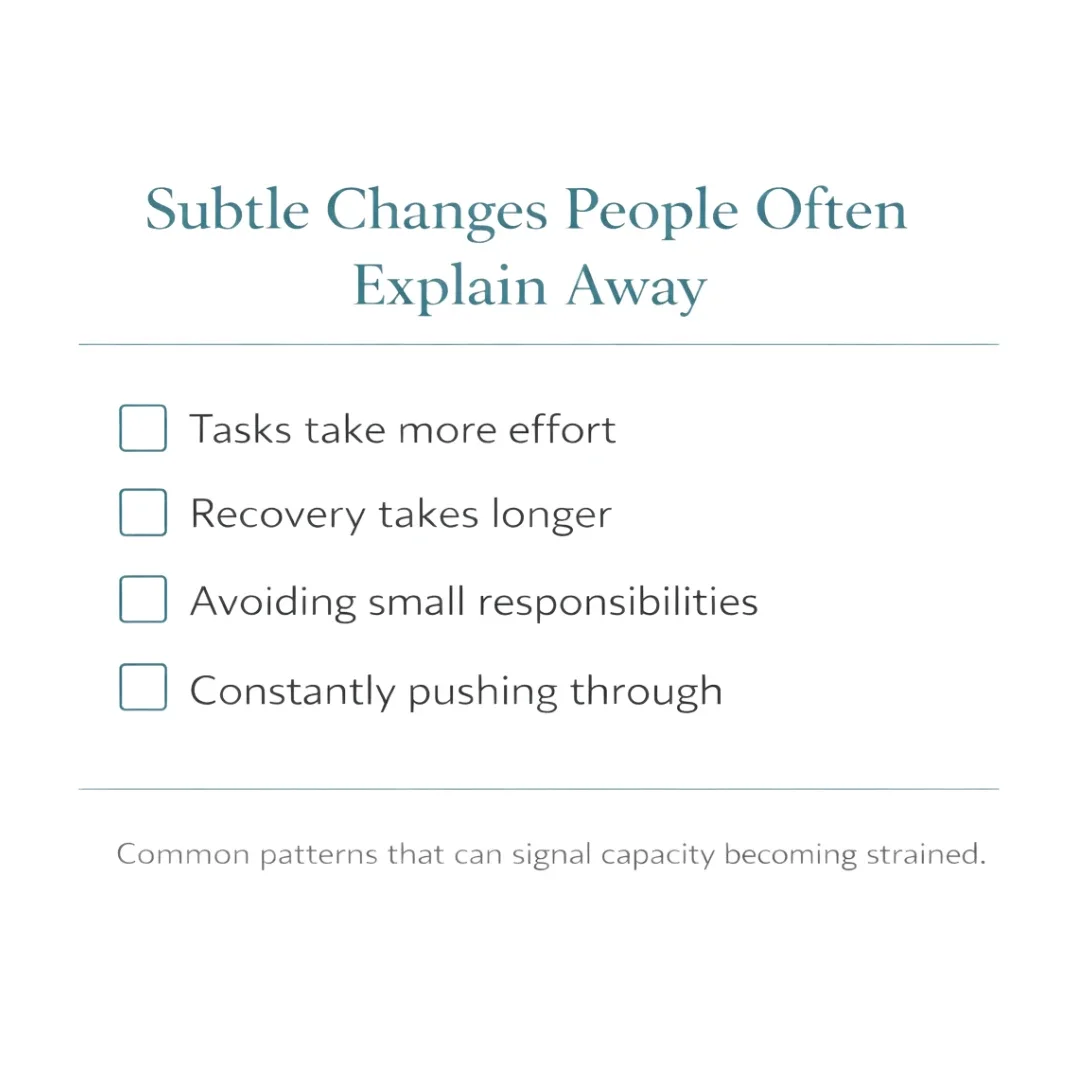
Subtle Signs People Tend to Dismiss
Many people wait for a clear crisis that never comes. Instead, they live with smaller signs that feel easier to explain away.
They notice they are avoiding tasks they used to manage. They recover more slowly after busy days. They feel consistently behind, even when nothing major is happening. They stop looking forward to things without feeling actively distressed.
Because these signs are not dramatic, people often dismiss them. They tell themselves they just need more discipline, better routines, or a break.
The Cost of Delaying Support for Depression
Over time, untreated functional strain tends to spread. What begins in one area of life gradually affects others. Work stress bleeds into relationships. Emotional exhaustion reduces patience and flexibility. Confidence erodes.
Seeking support earlier does not mean something is wrong with you. It often means you have noticed that the way you are coping is no longer sustainable.
Therapy can help interrupt this pattern before functioning narrows further and before the strain becomes harder to unwind. Speaking with a therapist about depression can also help clarify why daily functioning has started to feel harder and what support may help restore capacity.
A Brief Check-In on Daily Functioning
Rather than trying to decide how depressed you feel, it can be more useful to notice how your days are actually going.
Over the next few days, you might quietly check in with three questions:
How much effort do everyday tasks take right now?
How long does it take to recover after a normal day?
How often am I relying on pushing through rather than having enough energy?
There is no right answer and nothing to track or fix. These questions are not meant to change anything. They are simply a way of paying attention to patterns that are often easy to overlook.
If daily life feels consistently heavier or narrower than it used to, that information matters.
How Therapy Helps Improve Daily Functioning
Looking at What Daily Life Actually Requires Right Now
When people seek therapy for depression, they often expect the focus to be on mood alone. In practice, sessions frequently begin with a closer look at daily life.
Therapists pay attention to what the person is being asked to carry. The pace of their days. The roles they occupy. The expectations they place on themselves. Functioning is understood in context, not in isolation.
This shift can be relieving. Instead of asking why someone feels the way they do, therapy begins by asking how they are managing to get through their days and where that effort is breaking down.
Reducing Internal Friction, Not Forcing Motivation
Therapy does not aim to manufacture motivation. Pushing harder rarely works when depression is affecting functioning.
Instead, the work often focuses on reducing the internal friction that makes action feel inaccessible. This can include loosening self-critical thought patterns, addressing avoidance that has become protective, and helping the nervous system settle enough to re-engage.
As friction decreases, capacity often increases. Tasks become slightly easier to approach. Follow-through becomes more consistent. These changes are usually subtle at first, but they matter.
Supporting Daily Life Alongside Emotional Healing
Improvement in functioning often comes before noticeable shifts in mood. People may find they are able to keep up more reliably, recover more quickly after demanding days, or feel less depleted by routine tasks.
As daily life becomes more manageable, emotional space opens up. Interest, connection, and a broader emotional range often return gradually.
Therapy supports this process by working with the reality of the person’s life, not by asking them to push beyond what they currently have available.
What Improvement in Depression Looks Like
Small Functional Shifts Come First
When depression begins to lift, it rarely does so in dramatic ways. Most people do not wake up feeling suddenly motivated or emotionally light.
Instead, they notice small changes in how they move through the day. Starting tasks takes a little less effort. Interruptions feel less destabilizing. There is slightly more flexibility when plans change or energy dips.
These shifts are easy to overlook, especially if someone is waiting to feel different emotionally. In practice, they are often the first signs that capacity is returning.
Consistency Matters More Than Motivation
Improvement often shows up as steadier functioning rather than stronger motivation. People may still have low days, but those days do not derail everything else.
They recover more quickly after setbacks. They are able to return to routines without needing to start over each time. The internal negotiation required to get through basic responsibilities becomes less intense.
This kind of consistency builds confidence slowly. It restores a sense of reliability, even when mood remains uneven.
Progress is Rarely Linear
It is common for improvement to feel uneven. Better days are followed by harder ones. Gains appear, then seem to disappear.
This does not mean therapy is failing. It reflects the reality of rebuilding capacity while life continues to make demands. Over time, the overall direction becomes clearer, even if individual weeks fluctuate.
Learning how to respond differently to low days is often just as important as having fewer of them.
Depression and Daily Functioning: Frequently Asked Questions
How Do I Know if My Depression Is Affecting My Daily Functioning?
Depression often affects daily functioning when everyday tasks start requiring significantly more effort, energy, and mental focus than they used to. Starting things feels harder. Concentration drops more quickly. Recovery after busy days takes longer.
If daily life feels heavier, narrower, or more exhausting over time, that change in functioning is often meaningful, even if responsibilities are still being met.
Can You Have Depression and Still Function Day to Day?
Yes. Many people with depression continue working, parenting, and meeting responsibilities even while experiencing significant internal strain. What often changes is how much effort daily life requires. Tasks that once felt manageable begin to feel draining. Recovery time increases. There is less energy left over once obligations are met. Functioning outwardly does not mean the experience is sustainable internally.
What Is the Difference Between Burnout and Depression?
Burnout is usually tied to ongoing stress in a specific role, such as work or caregiving, while depression tends to affect mood, motivation, and functioning across multiple areas of life. Depression tends to affect functioning more broadly. Low energy, reduced motivation, or emotional narrowing show up across multiple areas of life, not only where stress originates. A therapist looks at patterns over time to help clarify which is contributing more strongly.
Can Depression Affect Your Ability to Function Even if You Are Not Sad?
Yes. Depression does not always involve persistent sadness and can instead appear as low energy, reduced motivation, emotional numbness, or difficulty functioning.
Some people experience numbness, irritability, or a steady loss of energy and motivation. Others notice that daily tasks require far more effort than they used to. Changes in functioning can be one of the earliest signs, even when mood does not feel dramatically low.
When Should I Seek Help for Depression Affecting Daily Life?
It may be time to seek help when depression begins consistently interfering with daily responsibilities, energy levels, or the ability to recover after normal days.
Counselling can be helpful when functioning is becoming harder to maintain, even if there has not been a clear crisis or breaking point.
Do I Really Need Therapy if I Am Still Functioning?
No. Therapy can still be helpful even if you are functioning day to day but noticing that the effort required to maintain responsibilities keeps increasing.
Many people seek counselling when pushing through no longer works the way it once did. Therapy can help address the growing effort required to manage daily life, before strain deepens further or capacity narrows more significantly.
Noticing Change Without Forcing a Conclusion
Many people spend a long time trying to decide whether what they are experiencing is serious enough to matter.
Another option is to notice what has changed. How much effort daily life requires now compared to before. How quickly energy runs out. How much pushing through has become part of the routine.
Those observations do not require a label or a decision. They are simply information.
Counselling can offer a space to make sense of those changes without pressure to define them too quickly or to move faster than feels manageable.
