
How to Stop Being So Hard on Yourself and Build Self-Compassion
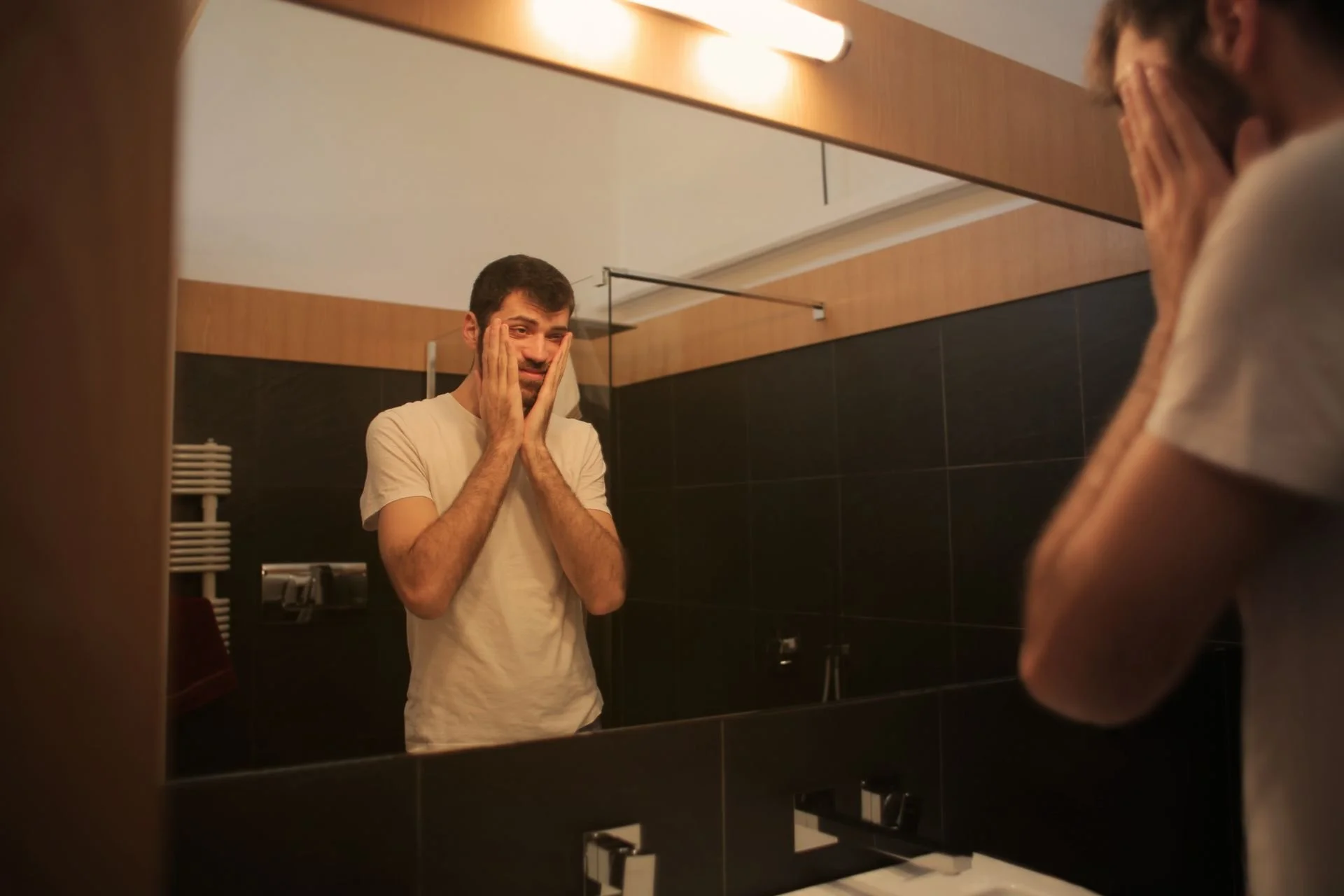
Photoby:Andrea Piacquadio
Most people speak to themselves in a tone they would never use with anyone they care about. A missed deadline becomes proof of being lazy. One clumsy sentence in a meeting replays for the rest of the afternoon. If a friend talked to you that way, the unfairness would be obvious, yet it slides right past when the voice is your own.
Self-compassion is the practice of meeting those moments with the same steadiness you would offer someone you care about. It is one of the most researched skills in mental health, and one of the least used. Being hard on yourself is not a character flaw. The critical voice usually began as a way to stay safe, and it tends to run loudest in people who care a great deal about doing things well.
At The Mental Health Clinic, we work with people across Alberta who are capable, conscientious, and quietly worn down by their own standards. Treating yourself with more compassion does not mean lowering those standards; it means changing how you speak to yourself while you work toward them.
Table of Contents
- What is Self-Compassion?
- Why Am I So Hard on Myself? Understanding the Inner Critic
- How Self-Criticism Affects Your Mental and Physical Health
- Self-Compassion vs Self-Esteem: What's the Difference?
- How to Be Kinder to Yourself: Evidence-Based Ways to Build Self-Compassion
- When Self-Criticism May Be a Sign of a Mental Health Concern
- Self-Compassion Therapy in Alberta: How Counselling Can Help
- Frequently Asked Questions About Self-Compassion
- Final Thoughts
What is Self-Compassion?
Self-compassion is treating yourself with the same care, understanding, and honesty you would give a good friend who is struggling. Kristin Neff, the psychologist whose research defined the concept, describes it as three parts working together: self-kindness instead of harsh judgment, common humanity instead of isolation, and mindfulness instead of avoiding or exaggerating what you feel.
Those three parts matter because each one answers something self-criticism does. Self-criticism attacks, so self-kindness offers a different response. It isolates you in the belief that you are uniquely deficient, so common humanity reminds you that struggle is shared. It either buries a feeling or blows it out of proportion, so mindfulness holds the feeling in a steadier, more accurate light.
Two misunderstandings tend to get in the way. The first is that self-compassion is self-pity. Self-pity pulls you deeper into "why me" and cuts you off from other people, while self-compassion does the reverse by reminding you that difficulty is something everyone meets. The second is that it means going easy on yourself or dropping your standards. The research points the other way, which the section on motivation gets into below.
Why Am I So Hard on Myself? Understanding the Inner Critic
Most people are hard on themselves because the critical voice was learned early, usually as a way to avoid rejection, failure, or disappointing someone whose approval mattered. In clinical practice, we often see that the inner critic is not random cruelty. It is an old protective strategy that kept running long after the situation that created it was gone.
Children who grow up around frequent criticism, high expectations, or unpredictable approval often build an internal monitor. The logic underneath it is simple: if I catch my flaws before anyone else does, maybe I can avoid being judged for them. For a while, that vigilance can even look like it works. It just carries a cost that adds up over years.
For teens, the same pattern often forms through constant comparison, academic pressure, and a social feed full of everyone else's edited highlights. The critic learns to measure worth against an impossible standard, and that habit can carry well into adulthood if nothing interrupts it.
One thing worth being honest about: understanding where the critic came from rarely quiets it on its own. You can know the voice is unfair and still believe it in the moment. Emotional patterns respond to practice, not just insight, which is why the tools later in this article matter more than the explanation.
Signs You May Be Too Hard on Yourself
Self-criticism does not always announce itself. It often hides inside habits that look like being responsible or humble. Common signs include:
You replay small mistakes for hours or days after they happen.
Compliments slide off, while criticism sticks.
You feel guilty resting, even when you are genuinely tired.
You apologise reflexively, including for things that are not your fault.
Your standards are all-or-nothing, so anything short of perfect reads as failure.
You compare yourself to other people constantly and rarely come out ahead in your own head.
Seeing yourself in several of these is common, and it is a useful place to start rather than one more thing to hold against yourself. If they feel familiar, you may also recognise a related pattern in people-pleasing, where tuning out your own needs and judging yourself harshly tend to reinforce each other.
How Self-Criticism Affects Your Mental and Physical Health
Constant self-criticism is not only a mental habit; it registers in the body. When you attack yourself, the brain reads it as a threat and activates the same stress response it would use for an external danger, raising cortisol and keeping the nervous system on alert. Self-kindness does close to the reverse, engaging the parasympathetic system that helps the body settle.
Paul Gilbert, who developed compassion focused therapy, describes three emotional systems that help explain this: threat, drive, and soothing. Self-criticism keeps the threat system running. Self-compassion activates the soothing system, which is what allows the body to recover.
This is part of why people who are relentlessly self-critical often describe feeling tense, tired, and on edge without an obvious external reason. The threat system was built for short bursts, not for a running commentary that never lets up. Over months and years, that low-grade activation contributes to the kind of depletion people recognise as burnout.
Self-Compassion vs Self-Esteem: What's the Difference?
Self-esteem is how much you value yourself, and it usually rides on results: doing well, looking good, coming out ahead of other people. That makes it fragile, because it tends to drop exactly when you fail or fall behind. Self-compassion is steadier because it does not depend on succeeding. It shows up precisely when things go wrong, which is when you need it most.
The most common objection is that self-compassion will make you soft or unmotivated. The research points the other way. In a set of studies by Juliana Breines and Serena Chen, people who were guided to respond to a setback with self-compassion, rather than self-criticism, were more motivated to improve and to keep working, not less. The mechanism is not mysterious. Self-criticism keeps the threat system running, and a mind braced against threat narrows toward defending and avoiding, which is part of why harsh self-talk so often ends in shutting down or giving up. Self-compassion lowers that threat response enough that you can look squarely at what went wrong, which is what lets you do something about it. This is also why self-compassion tends to support what psychologists call mastery goals, the drive to learn and get better, rather than the anxious effort of proving yourself.
This connects to why self-esteem that depends on performance falls apart when performance dips. Compassion gives you something to stand on that does not vanish the moment you make a mistake.
How to Be Kinder to Yourself: Evidence-Based Ways to Build Self-Compassion
Most self-compassion advice stops at "talk to yourself the way you would talk to a friend." That is a reasonable starting point, and it is also the part everyone has already read. The tools below are less familiar, and each one has research or an established clinical model behind it. You can use all of them today.
1. Notice the "Second Arrow" of Self-Criticism
There is an old idea, used widely in therapy now, that pain arrives with two arrows. The first arrow is the difficult thing itself: the mistake, the rejection, the hard day. The second arrow is what you do to yourself about it afterward, the criticism piled on top of the original hurt. For most people, the lasting suffering from a bad moment is the second arrow, not the first.
Noticing the second arrow as its own separate event is useful, because it is the part you can actually change. You may not be able to undo the mistake. You can stop firing at yourself for it.
2. Use Your Own Name When Talking to Yourself
When you are caught in self-criticism, the words you use to refer to yourself change how hard it lands. Research led by Ethan Kross, across seven studies with hundreds of participants, found that people who worked through a stressful moment using their own name or "you," rather than "I," felt less distress, performed better, and dwelt on it less afterward.
Try this when the critic starts up. Instead of "I am going to embarrass myself, I always do this," switch to "Emily, you are nervous about this, and you have handled harder things before." Using your name, or "you," puts a small amount of distance between you and the feeling. Rather than being stuck inside it, you are speaking to yourself from a step back, closer to how you would steady someone else. That distance is what quiets the threat response enough to think clearly.
3. Use Self-Soothing Touch to Calm Your Nervous System
Self-criticism sits in the body as much as the mind, so sometimes the quickest way in is physical rather than verbal. In a randomized controlled trial, researchers found that a brief self-soothing touch lowered cortisol after a stressful task about as much as receiving a hug from another person.
Here is the version used in that study. Place one hand on the centre of your chest and the other on your stomach. Hold them there for about twenty seconds, let your breathing slow, and pay attention to the warmth and the light pressure of your own hands. It can feel strange the first few times. That awkwardness fades, and what is left is a body that has dropped out of alarm, which makes every other tool easier to use.
One thing to expect: offering yourself warmth can feel uncomfortable, even upsetting, at first. In self-compassion training, this is called backdraft. When kindness is unfamiliar, it can surface how little of it you have received, and old feelings can come up. That is a normal response, not a sign the practice is failing. If it happens, keep the touch and your tone neutral and steady rather than warm, and let that be enough.
4. Ask What Your Inner Critic is Trying to Protect
Arguing with a harsh inner voice usually makes it louder. A different move, drawn from internal family systems therapy, is to treat the critic as a part of you with a job rather than an enemy to beat. Richard Schwartz, who developed that approach, describes inner critics as protectors that took on a harsh role early, usually to guard against rejection or failure.
When the critic is going, pause and ask it a real question: what are you afraid would happen if you eased off? The answer is often something vulnerable, along the lines of "you would get lazy and people would leave," or "you would get hurt again." Once you can hear the fear underneath the attack, the voice tends to soften, because it is finally being listened to instead of fought. You are not agreeing with it. You are understanding what it has been trying to do, which is the thing that lets it stand down.
5. Practise Fierce Self-Compassion When Comfort Isn't Enough
Self-compassion is not only soft. Kristin Neff describes a fierce side as well, the part that protects you and moves things forward. The tender version soothes. The fierce version does something about the situation: it sets a boundary, steps back from something that keeps hurting you, or says plainly what you need. It matters because people who only ever soothe themselves can stay stuck in circumstances that keep generating the pain. Before reaching for any tool, ask which the moment actually calls for. Sometimes you need comfort. Sometimes you need to act on your own behalf.
When Self-Criticism May Be a Sign of a Mental Health Concern
A harsh inner voice is common and, in ordinary doses, manageable with practice. Sometimes it is a symptom of something that needs more support. When self-criticism is constant, cruel, and tied to a persistent low mood, loss of interest, or hopelessness, it can be part of depression. When it fixates on appearance, eating, or weight, it can point to disordered eating. When it drives relentless overwork and a fear that nothing is ever good enough, it often overlaps with perfectionism and anxiety.
The line worth watching is function. If self-criticism is affecting your sleep, your relationships, your work, or how much you can enjoy anything, that is a signal to treat it as more than a habit to manage on your own.
Self-Compassion Therapy in Alberta: How Counselling Can Help
When the critical voice is loud enough to shape your daily life, working with a therapist can help you change your relationship with it rather than just trying to argue it down. At The Mental Health Clinic, our therapists use approaches like cognitive behavioural therapy to address self-critical thinking patterns, internal family systems to work with the part of you that took on the critic's job, and acceptance and commitment therapy to loosen its hold. We offer virtual counselling across Alberta for teens, adults, couples, and families.
Frequently Asked Questions about Self-Compassion
Isn't self-compassion just an excuse to be lazy?
No, and the research suggests the opposite. People who respond to setbacks with self-compassion tend to be more motivated to improve and more willing to try again, because they are not also managing shame. Self-compassion supports the goal of getting better rather than the anxious goal of proving yourself, which is usually more sustainable over time.
Does talking to yourself by name actually help?
Yes, and there is research behind it. Studies led by Ethan Kross found that people who worked through stress using their own name or "you," instead of "I," felt less distress and coped better. Referring to yourself by name creates a small psychological distance that calms the threat response and makes it easier to think clearly. It is one of the simplest ways to interrupt a spiral of self-criticism in the moment.
What's the difference between self-compassion and self-esteem?
Self-esteem is how highly you rate yourself, and it usually depends on results, comparison, and success. That makes it unstable, because it drops when you fail. Self-compassion does not depend on doing well; it is available precisely when things go wrong. This is why it tends to hold up under pressure when self-esteem does not.
Why does being kind to myself feel so uncomfortable or fake?
For people who are used to self-criticism, warmth toward yourself can feel unfamiliar and even distressing at first. In self-compassion work, this response is called backdraft. Offering yourself kindness can surface how little of it you have received, and old feelings can come up. Starting with a neutral, matter-of-fact tone rather than effusive warmth usually makes it easier to accept.
Can virtual therapy help with self-criticism?
Yes. Virtual counselling is widely available across Alberta and works well for self-criticism, since much of the work involves noticing and changing thought patterns rather than anything physical. It also removes travel and makes it easier to reach a therapist if you live outside a major centre. At The Mental Health Clinic, we offer online sessions for clients throughout the province.
How long does it take to quiet a harsh inner critic?
There is no fixed timeline, and the critic rarely disappears entirely. Most people notice they can catch and answer the voice sooner within a few weeks of regular practice. Deeper patterns, especially those formed in childhood, often take longer and benefit from working with a therapist. Progress usually looks like believing the critic less, not silencing it completely.
Final Thoughts
Being kinder to yourself is less a single decision than a set of small corrections, repeated until the harsh voice loses some of its authority. It rarely disappears completely. What changes is how much you believe it, and how quickly you can answer it with something steadier. Whether you are in Calgary, Edmonton, Red Deer, or a smaller community, the practice is the same, and it gets easier with repetition. The inner critic had a long head start. That does not mean it gets the last word.
Educational Disclaimer
This article is for educational purposes only and is not a substitute for professional medical advice, diagnosis, or treatment. If you're experiencing mental health concerns that interfere with your daily functioning, please reach out to a qualified mental health professional. If you're in crisis, contact your local crisis line or emergency services immediately.
