
What Happens When Men Don't Ask for Help
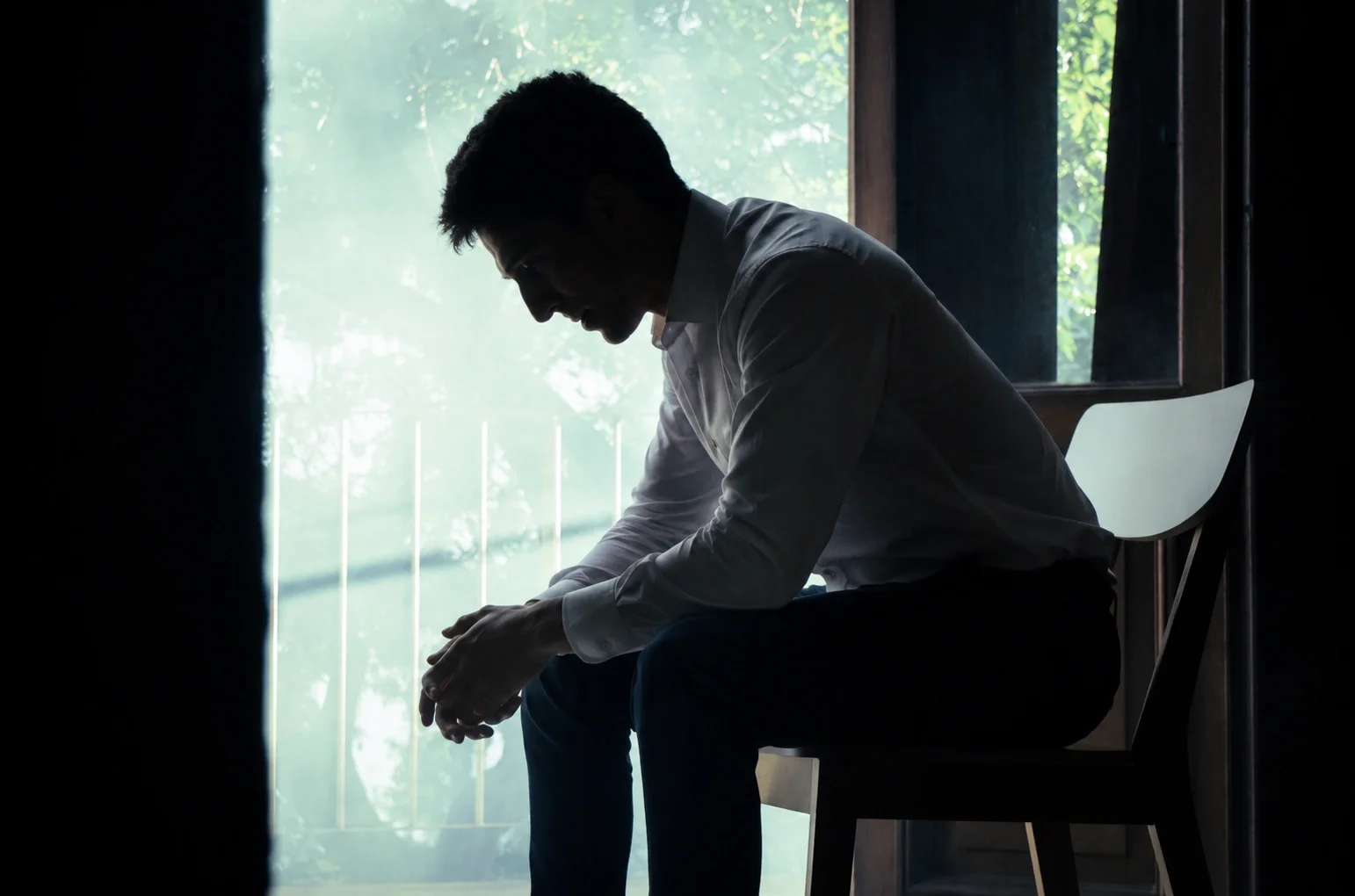
There's a pattern that comes up often in therapy: a man arrives, usually because someone close to him suggested it, and describes a rough few months. He mentions the irritability, the way he's been pulling back from people, the work that expanded to fill every hour. He doesn't call it depression; he calls it stress, or a difficult period, or just how things have been lately.
The stress is real. What often goes unnamed is what's underneath it.
This is one of the more consistent things we see in clinical practice: men don't typically recognise their own distress as something that warrants help, and the people around them often don't know what they're looking at either. Mental health support is available across Alberta for men who are ready to reach out. The harder question is why men don't ask for help in the first place.
Why Men Don't Ask for Help with Mental Health
Men are significantly less likely than women to seek mental health support. The reasons are layered and interconnected, and they compound each other. Understanding each one separately is useful, because they operate differently and respond to different things.
How Masculine Norms Make Silence Feel Necessary
From early on, most men absorb a consistent message: handle your own problems, because needing help is weakness and struggling without complaint is strength. These aren't abstract ideas; they shape the internal logic men use to evaluate their own responses to difficulty.
A 2025 systematic review published in the American Journal of Men's Health examined 47 studies on masculine norms and help-seeking behaviour. Across the research, the pattern was consistent: men who strongly endorsed traditional masculine values, particularly self-reliance and emotional stoicism, were significantly less likely to seek mental health support, and more likely to experience serious psychological distress as a result.
In clinical practice, this shows up in a specific way. Asking for help doesn't just feel uncomfortable for many men; it feels like evidence that they've failed at something fundamental. The bar for reaching out becomes very high, because reaching out itself carries a cost to how a man sees himself.
Why Men Are Taught Not to Talk About What They Feel
From boyhood, most men receive traditional social instruction that emotional expression is incompatible with being male. The message comes from multiple directions: a father who handles difficulty in silence, peers who respond to vulnerability with ridicule, cultural scripts that equate stoicism with strength and emotional openness with weakness. By the time a man is an adult, the suppression of inner experience isn't a decision he consciously makes; it's been practised long enough to feel automatic.
This matters clinically because the barrier isn't only about therapy. It's about language. Many men who are struggling have limited access to words for what they're experiencing, not because a lack of intelligence or the feelings aren't there, but because they've spent decades not naming them. When a partner or a doctor asks how they're doing, an honest answer requires vocabulary that was never developed.
The result is that emotional suppression gets mistaken for stoicism, or for coping. A man who doesn't talk about what he's feeling can look, from the outside, like someone who is managing. What the research shows is that the feelings don't disappear; they tend to surface through behaviour, through the body, and eventually through the symptoms covered in the next section.
Why Many Men Don't Recognise Their Own Symptoms
Alongside these barriers is another obstacle: most men don't identify what they're experiencing as something clinical. The common picture of depression involves sadness, tearfulness, and visible withdrawal. That picture is real, but it fits how depression tends to present in women more often than in men.
When distress doesn't look the way a man expects distress to look, he doesn't recognise it as distress. He attributes what he's going through to circumstances, to work, to a difficult period. The internal experience is real; the framework for understanding it is missing.
A 2025 national survey by the Canadian Men's Health Foundation found that 67% of Canadian men had never sought professional mental health support. The stigma barrier is part of that number. So is the recognition gap: many men don't seek help because they genuinely don't know what they're looking at.
Why Some Men Avoid Mental Health Diagnoses
There's a distinction worth making between the stigma of seeking help and the fear of what seeking help might confirm. For many men, the concern isn't only about being seen as weak; it's about what a clinical label might mean going forward. Will a mental health diagnosis affect how they're perceived at work? How will their partner see them? What will their children know, and when? What does it mean for how a man understands himself.
This concern doesn't always get named, but it comes up in clinical settings. Men who have suspected for some time that something was clinically wrong sometimes say, once they're in the room, that they avoided finding out because they weren't sure they wanted to know. The avoidance isn't always about pride. Sometimes it's about protecting a version of themselves that felt liveable, even when difficult.
The result is that men carry a level of awareness they don't act on. They recognise the signs, sense what they might mean, and remain on the edge of seeking help without crossing it.
Why Men Rarely See Other Men Ask for Help
Most men don't have a clear picture of what it actually looks like for a man to get mental health support. The behaviour is rarely visible. Men who do access therapy don't typically talk about it, which means that for the men around them, it doesn't appear to be something men do. The absence of visible examples makes the behaviour harder to imagine doing yourself.
This is distinct from stigma, though it reinforces it. It's not only that men fear being judged for seeking help; it's that the act has no familiar shape. There's no frame of reference for what the first call sounds like, what a therapist's office looks like, or what the conversation involves. When a behaviour has no visible template in a person's life, the activation energy required to initiate it is significantly higher.
Research on help-seeking identifies perceived social norms as a meaningful predictor: men who know other men who have accessed support are more likely to access it themselves. The invisibility of men's help-seeking is, in part, what sustains it.
Not Knowing How or Where to Start
Even when a man recognises that something is wrong and decides he wants to do something about it, the path forward is often unclear. Who do you call? What do you say when someone answers? Is a GP the right starting point, or a therapist directly? What happens in a first appointment, and do you need to have things figured out before you walk in?
For men with no prior experience with mental health support and no one in their immediate circle who has talked about it openly, these questions don't have ready answers. The uncertainty becomes a reason to delay. It's easier to wait for a clearer moment, a lower-pressure entry point, or some signal that the situation warrants the effort.
What tends to happen is that the clearer moment doesn't arrive on its own. Knowing that a GP visit is a reasonable first step, that a clinic won't expect a prepared account of why you're there, and that a first appointment involves no commitment to anything beyond showing up, can be enough to move the threshold from impossible to manageable.
Signs of Depression in Men That Often Go Unnoticed
Depression in men tends to look different from how most people picture it, and that difference is part of why male depression so often goes unaddressed. The clinical symptoms are real, but they don't always arrive in a form that gets recognised.
Anger, Irritability, and a Short Fuse
Clients often describe it as a low-grade tension that sits just under the surface. Minor frustrations produce disproportionate reactions, and conversations that should be unremarkable start turning into arguments. The people closest to them begin treading carefully.
Clinical research consistently shows that irritability, anger and aggression are among the most common expressions of depression in men, reported significantly more often than in women. Anger is a more socially acceptable male emotion than sadness, which means it tends to get expressed more readily and recognised less often for what it actually is.
From a clinical standpoint, this matters because irritability reads as a personality or relationship problem before it reads as a mental health symptom. The man gets labelled as difficult, or stressed, rather than someone struggling with something that has a name and a treatment.
Withdrawal, Overwork, and Pulling Back
The withdrawal pattern tends to be quieter. Plans get cancelled. Responses to messages slow down. Social events that used to feel manageable now feel like too much. The man who used to show up for things stops showing up, and the explanation is always reasonable: work, tiredness, other commitments.
Overwork is often the other side of this. Throwing themselves into work gives men a socially rewarded way to disappear. Long hours are easier to explain than pulling away from people, and they provide enough structure and stimulation to keep the internal experience at a distance.
In therapy, we often see these two patterns in the same person, sometimes at different points. The overwork runs until it can't sustain itself, and then the withdrawal takes over. Neither looks like depression from the outside.
Physical Symptoms Men Dismiss as Something Else
Depression and chronic stress have well-documented physical effects: disrupted sleep, tension headaches, digestive problems, and a physical heaviness that's difficult to trace back to a specific cause. Men tend to notice these symptoms and attribute them to training, a rough stretch at work, or simply not sleeping well enough.
The connection is easy to miss. The headaches are real, and so is the disrupted sleep. But when these symptoms arrive alongside irritability, low motivation, and withdrawal from things that used to matter, they're often part of the same picture, not separate problems with separate causes.
In clinical practice, we often see men who have been managing physical symptoms for months, sometimes years, before the psychological context becomes clear. A man who has seen several doctors about his headaches may not have mentioned that he's been increasingly detached from his family, or that his interest in work he used to find meaningful has quietly disappeared.
The Long-Term Effects of Untreated Depression in Men
The costs are concrete and they accumulate. That same 2025 Canadian Men's Health Foundation study found that 64% of Canadian men reported moderate-to-high levels of stress and 23% were at risk of moderate-severe depression, both figures up from the previous year. Distress that goes unrecognised and unaddressed doesn't stay contained; it moves through every part of a man's life.
How Untreated Mental Health Problems Affect Relationships
When distress goes unnamed, the people closest to the man tend to absorb the impact of it. The irritability gets directed at partners and children, while the withdrawal creates distance that's hard to name and harder to close. Partners often describe a sense of living alongside someone who has become unreachable, without a clear understanding of when or why it changed.
This dynamic tends to compound the problem. The same 2025 Canadian Men's Health Foundation survey found that one in two Canadian men is at risk of social isolation, with the risk rising significantly for men who live alone or are younger. Isolation, in turn, makes distress more entrenched and harder to shift.
In therapy, this often surfaces when a man arrives because a relationship is in serious trouble. The presenting problem is the conflict or the distance. What emerges over time is that the relationship difficulty has been a symptom of something that's been building much longer.
How Untreated Depression Affects Work Performance
Untreated psychological distress doesn't stay contained to a man's personal life. Concentration, working memory, and the capacity to make sound judgments all degrade under chronic stress. The effects tend to be gradual enough to go unnoticed for a long time. A man might start missing details he would normally catch, taking longer to process information, or responding to workplace friction more sharply than the situation warrants.
Presenteeism (being physically present but mentally unavailable) is one of the more measurable costs. Research on occupational health consistently shows that untreated depression and anxiety have a greater impact on work productivity than absenteeism does. A man who hasn't taken a sick day in years might still be operating at a significantly reduced capacity, making decisions from a depleted baseline without recognising how much his judgment has shifted.
The professional consequences tend to accumulate quietly. A difficult conversation handled badly, an opportunity not pursued, a reputation for being disengaged or short-tempered: these things compound over time in ways that are hard to trace back to mental health after the fact.
How a Father's Untreated Mental Health Affects His Children
Children learn what emotional life looks like by watching the people closest to them. A father who is persistently withdrawn or emotionally unavailable communicates something to his children about what men do with difficult feelings, regardless of what anyone says out loud.
The research on paternal mental health and child development is consistent. Fathers with untreated depression tend to be less engaged and more critical in their parenting, and children in these households show higher rates of behavioural difficulties, anxiety, and depression themselves. The effects are documented across early childhood, middle childhood, and adolescence.
This is not about assigning blame. A man's unaddressed distress moves through his relationships, and for children, the model their father provides for how men handle difficulty has a long reach.
Why Untreated Depression Gets Worse Over Time
Depression that goes without support tends to follow a predictable course: it deepens. What begins as something manageable, a rough patch a man might attribute to circumstances, becomes harder to shift the longer it remains unaddressed. The coping patterns that develop early (staying busy, keeping things surface-level, avoiding anything that requires emotional energy) become more rigid over time and more difficult to step out of.
There is a well-documented relationship between untreated depression and the development of anxiety, and between both and increased risk of substance use. Men who don't seek support for depression are more likely to turn to alcohol or other substances to manage the internal experience, which introduces its own complications and makes the underlying condition harder to treat.
The clinical picture becomes more complex the longer it goes unaddressed. Treatment works, and the research is consistent on this point: early intervention produces better outcomes than late intervention. A man who seeks support when symptoms first emerge has a meaningfully different prognosis than one who waits years.
Physical Health and Untreated Stress in Men
The physical consequences of long-term untreated stress and depression are well-documented. Chronic psychological stress activates the body's cortisol response over extended periods, which has measurable effects on cardiovascular function, immune response, and inflammation. Men who carry significant psychological distress without support are at elevated risk for hypertension, heart disease, and metabolic disorders.
This matters particularly for men, who already have a higher baseline risk for cardiovascular disease and are less likely to attend routine healthcare appointments. When psychological distress goes unaddressed alongside that, the physical risk compounds over time.
In 2023, there were 4,735 suicide deaths in Canada. Males account for nearly 75% of those deaths. That statistic sits at the far end of what goes wrong when distress accumulates without support, but it points to something worth understanding at every stage before that point: the cost of going without help doesn't stay level. It tends to increase.
Final thoughts
The man who described a rough few months but called it stress isn't unusual. He's the norm. Most men who are struggling haven't identified it as struggling, and most of the people around them haven't either. That gap, between what's happening and what gets addressed, can stay open for a long time.
What the research shows, and what clinical practice consistently reflects, is that the cost of going without help doesn't stay level. It accumulates in relationships, in physical health, in work, and in the lives of children watching how the men around them handle difficulty. In Calgary, Edmonton, and communities across Alberta, that pattern plays out in clinical settings every day. Naming what's underneath the stress is where it starts.
Men's Mental Health FAQ
Is men's mental health getting worse in Canada?
Recent data suggests it is. The 2025 Canadian Men's Health Foundation study found that 64% of Canadian men reported moderate-to-high levels of stress, up 4% from the previous year, and 23% were at risk of moderate-severe depression, also up 4%. One in two Canadian men is now at risk of social isolation, with the risk higher for men who live alone or are younger. In Alberta and across the country, 67% of men had never sought professional mental health support, a figure that has remained consistent despite growing public awareness.
What does depression actually look like in men?
Depression in men often presents as irritability, anger, and a short fuse rather than visible sadness. Men experiencing a depressive episode are more likely to withdraw from social connections, throw themselves into work, and report physical symptoms like disrupted sleep, headaches, and chronic fatigue. Because these symptoms don't match the common picture of depression, they tend to get attributed to stress or personality rather than recognised as something clinical. This recognition gap is one of the main reasons male depression goes unaddressed for as long as it does.
Why don't men go to therapy even when they know something is wrong?
Several things get in the way beyond stigma. Many men have no frame of reference for what therapy actually involves, and the uncertainty of walking into something unfamiliar adds to the resistance. There's also the practical reality that most mental health language and treatment frameworks were developed with women in mind, which can make therapy feel less relevant to men's actual experience. For many men, a GP visit is a more accessible first step than going directly to a therapist.
Why do men often describe depression as stress rather than a mental health problem?
Depression in men frequently surfaces through channels men have been taught to tolerate: sustained overload, fatigue, a short temper, disrupted sleep. Because these experiences can be explained as the reasonable result of a demanding life, they rarely trigger the mental health framework a man might apply to a more recognisable presentation. The language available to him fits the surface experience without reaching the clinical level. The gap isn't deliberate denial; it's that the framework he's using doesn't include the territory he's actually in.
What tends to finally push men to seek mental health support?
Most commonly it's a combination of accumulated cost and an external prompt. Research and clinical experience both point to a consistent pattern: men are more likely to seek support when the impact on their relationships, work, or physical health becomes undeniable, or when someone they trust names what they have been observing specifically and without pressure. A single conversation rarely shifts things on its own. For men who aren't sure where to start, a GP visit is often the most accessible entry point; it doesn't require framing the problem as a mental health issue, and a doctor can take it from there.
What happens to men's physical health when depression goes untreated?
Chronic psychological stress and untreated depression have measurable effects on physical health, including elevated risk for cardiovascular disease, hypertension, immune dysregulation, and chronic pain. Men are already at higher baseline risk for heart disease and are less likely to attend routine healthcare appointments, which means unaddressed psychological distress tends to compound physical risk over time. In men who have been carrying significant stress for extended periods, physical symptoms are often the most visible sign that something has been building far longer than they've acknowledged.
Educational Disclaimer
This article is for educational purposes only and is not a substitute for professional medical advice, diagnosis, or treatment. If you’re experiencing mental health concerns that interfere with your daily functioning, please reach out to a qualified mental health professional. If you’re in crisis, contact your local crisis line or emergency services immediately.
